

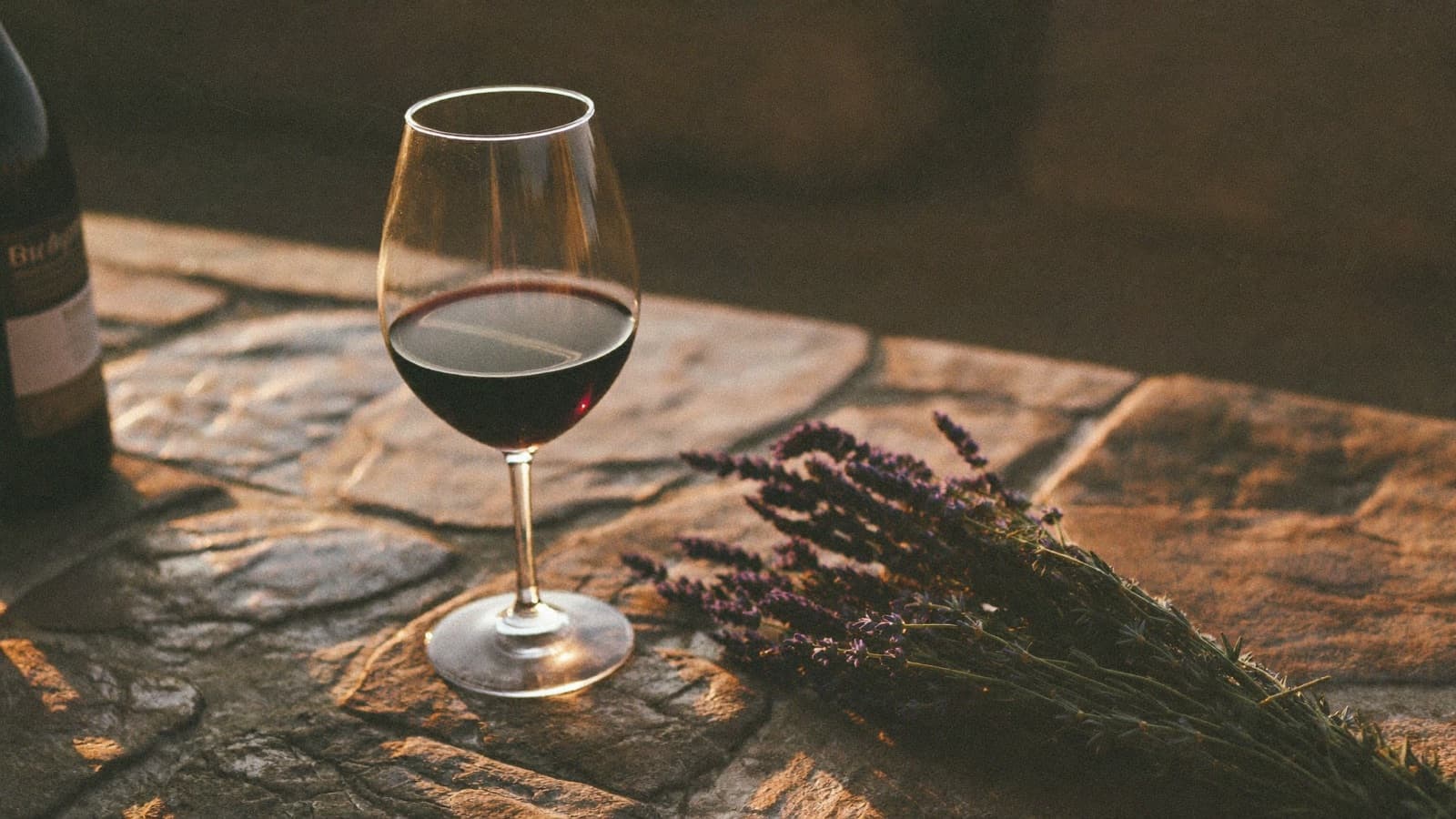
Most great wines are built on one grape. Burgundy is Pinot Noir. Napa is Cabernet. Barolo is Nebbiolo. Châteauneuf-du-Pape (shah-toe-NUFF doo POP) never got that memo. It's allowed to use up to thirteen.
That's the first thing to love about it. It's not even the best thing.
Châteauneuf-du-Pape packs nearly everything that makes wine worth caring about into a single bottle: a genuinely great story, a specific patch of ground that tastes like nowhere else, a blend you can geek out on for the rest of your life, and a wine that can age for decades or drink beautifully tonight. And unlike a lot of "important" wine, you don't need to be rich or credentialed to enjoy it. If one wine could convert a skeptic, this is the one.
Here's everything worth knowing.
So What Is Châteauneuf-du-Pape, Exactly?
Châteauneuf-du-Pape is a red wine from the Southern Rhône Valley in France, made around a small village of the same name just north of Avignon. The name translates literally to the Pope's new castle. (More on that in a second — it's a good story.)
It's the most famous appellation in the Southern Rhône, the warm, sun-baked, Mediterranean end of the Rhône Valley. The wine is almost always a red blend built on Grenache, and it's known for being warm, generous, spicy, and herbal — full of ripe red fruit and the scent of the wild hillside. It's a quintessential Old World wine: defined by its place first and its grapes second.
There's no rosé here, by the way, and no "Châteauneuf Cabernet." The rules permit red and white only — and 90-plus percent of what's made is red.
A Wine With a Papal Backstory
In 1309, Pope Clement V moved the entire papacy from Rome to Avignon, where it stayed for nearly 70 years. His successor, Pope John XXII, built a summer castle just up the road and planted vineyards around it — effectively the first celebrity wine endorsement, several centuries before anyone stuck a rapper's name on a Champagne bottle. The popes eventually went back to Rome; the vineyards stayed, and the reputation only grew.
That's the short version. The full story — including the local baron who wrote France's very first appellation rules in 1923, and the genuinely real law banning UFOs from landing in the vineyards — lives in our piece on why Châteauneuf-du-Pape on a wine list is a shortcut to reading any restaurant. Go read it after this. It's worth it.
The Wine That Breaks the One-Grape Rule
Here's the part that makes Châteauneuf-du-Pape genuinely special. The appellation permits 13 grape varieties in a single wine. Some producers use three or four. Some use all thirteen. A few traditionalists use just one. It's controlled chaos, and it's the whole personality of the place.
The classic thirteen:
Reds: Grenache, Syrah, Mourvèdre, Cinsault, Counoise, Muscardin, Vaccarèse, Terret Noir Whites (yes, white grapes can go into the red blend): Clairette, Bourboulenc, Roussanne, Picpoul, Picardan
A quick honesty note for the wine nerds: a 2009 revision to the rules counts the color variations of some grapes (Grenache Noir, Blanc, and Gris, for example) separately, which pushes the technical number to 18. But 13 is the number everyone learns, the number that's been the legend for a century, and the one worth teaching a kid who thinks wine is boring. One bottle, thirteen grapes. It turns wine from a list of rules into a story — which is exactly the point.
In practice, three grapes do most of the work, the famous GSM trio:
- Grenache is the backbone — usually 60–80% of the blend. It brings the ripe raspberry-and-cherry fruit, the warm spice, and that signature roundness that makes Châteauneuf approachable even when it's serious.
- Syrah adds structure, color, and dark fruit.
- Mourvèdre brings earth, depth, and a savory, almost meaty grip.
Everything else is seasoning — each grape adding a small dimension, like spices in a dish you'd never list individually but would absolutely miss.
What It Actually Tastes Like
A good Châteauneuf-du-Pape is warm, layered, and generous. Expect ripe raspberry and cherry, dried herbs (lavender, thyme, rosemary — basically the whole hillside), black pepper, a little leather, and a savory undertone French wine people call garrigue: the smell of the wild scrubby herbs baking in the Provençal sun.
The alcohol runs high, typically 14–15%, because this is a hot, sunny region and the Grenache ripens fully. But the best examples carry that warmth gracefully — the fruit, herbs, and moderate tannin keep it balanced rather than boozy. It's a big wine that somehow still feels welcoming.
Part of the reason it ripens so completely: many of the best vineyards are carpeted in galets roulés — large, smooth, pale river stones that soak up the day's heat and radiate it back to the vines all night. Not every parcel has them (there's sand, red clay, and limestone too), which is one reason two bottles from the same village can taste surprisingly different.
Traditional vs. Modern: Two Schools
Once you've had a few, you'll notice Châteauneuf comes in two broad styles, and knowing the difference makes you a much smarter buyer.
Traditional wines lean hard on Grenache, age in big neutral barrels (which add little to no oak flavor), and aim for elegance and transparency. They're often paler in color, more red-fruited, earthier, and more about perfume than power. The legendary, near-mythical Château Rayas takes this to its extreme — a pale, Burgundian, 100% Grenache cult wine.
Modern wines push for riper fruit, deeper color, a bigger share of Syrah and Mourvèdre, and sometimes new oak. They're darker, denser, more powerful, and more immediately impressive.
Neither is "right." But if a wine feels too pale or too powerful for your taste, the style — not the quality — is usually what you're reacting to. Ask which camp a bottle falls into and you'll dial in your preferences fast.
Why It Ages (and When to Drink It)
Châteauneuf-du-Pape is one of the great age-worthy values in wine. Here's the rough timeline:
- Young (1–4 years): Exuberant and fruit-forward — all ripe berries, spice, and warmth. Delicious, if a little loud.
- Mid-life (5–10 years): The fruit settles and complexity arrives — dried fig, tobacco, mushroom, and that haunting garrigue. For most bottles, this is the sweet spot.
- Old (15–30 years): Top producers (Beaucastel, Vieux Télégraphe, Clos des Papes, Rayas) can develop an almost Burgundian complexity that's wild for a wine that started life as a bold, sun-drenched Rhône red.
One catch worth knowing: like a lot of serious reds, Châteauneuf can go through a quiet, closed-down "awkward phase" somewhere around years 3–6, where it's past its baby fruit but not yet into its mature complexity. If a bottle seems muted, it's not bad — it might just need another few years, or a good decant. Speaking of which: a young Châteauneuf opens up beautifully with 30–60 minutes in a decanter, and it shows best a touch below room temperature (around 60–65°F — see our note on serving temperature).
It's also a relatively reliable wine, vintage to vintage. The reliably warm climate means there are very few genuinely bad years — which makes buying it less of a gamble than wines from cooler, more fickle regions.
How to Get Into It Without Overpaying
Good Châteauneuf-du-Pape generally starts around $45–80 a bottle, with top names well above that. That's a real wine, not an everyday pour. The good news: the Southern Rhône is built like a ladder, and the rungs below Châteauneuf are some of the best values in all of wine — same grapes, same sunshine, smaller price.
Work your way up:
- Côtes du Rhône (~$12–18): The broad regional tier. Mostly Grenache-led, easy, juicy, everyday. The on-ramp.
- Côtes du Rhône Villages (~$15–25): A step up in concentration, often from a named village. Real character for grocery-store money.
- Gigondas, Vacqueyras, Lirac (~$20–35): Châteauneuf's next-door neighbors, using the same grapes off similar soils. Gigondas in particular is frequently described as "baby Châteauneuf" — and it's where a lot of people fall in love before they ever spend up.
- Châteauneuf-du-Pape (~$45–80+): The flagship. Once the rungs below have taught you the style, this is where it all comes together.
The shrewd move at a restaurant or shop: if Châteauneuf is out of budget, ask for a Gigondas or Vacqueyras. You'll drink 85% of the experience for half the price, and you'll understand exactly what you're working toward.
Don't Sleep on White Châteauneuf-du-Pape
Yes, there's a white version, and almost nobody orders it. White Châteauneuf-du-Pape is made from grapes like Roussanne, Grenache Blanc, Clairette, and Bourboulenc. It's only about 5–7% of production, so it's rare — but if you spot it, order it. It's rich, textured, honeyed, and nutty, unlike any other white you've had, and it's spectacular with roast chicken or rich seafood. Finding it on a list is its own little signal that someone behind the wine program is paying attention.
At the Table
Châteauneuf-du-Pape is one of the most versatile food reds you can put on a table. The mix of ripe fruit, herbs, spice, and moderate tannin handles grilled and roasted meats, lamb, game, mushroom dishes, stews, hard cheeses, and hearty pasta with ease. If you want the full framework, our wine and food pairing guide covers the logic — but honestly, "Châteauneuf with anything roasted" rarely misses.
And here's the bonus: spotting Châteauneuf-du-Pape on a restaurant list is one of the fastest ways to tell whether a wine program is any good. It's specific enough, and just outside the mainstream enough, that its presence usually means someone made a deliberate, thoughtful choice. That's a two-second read you can run on any wine list — and we break down exactly why it works in the Châteauneuf-du-Pape wine list hack.
The Bottom Line
Châteauneuf-du-Pape is what happens when seven centuries of history, thirteen grapes, sun-baked stones, and a region that knows exactly what it's doing all land in one glass. It's serious enough to reward a lifetime of curiosity and generous enough to win over someone who swears they don't like wine.
If you're new to it, start a rung down — a good Gigondas or Côtes du Rhône Villages — to learn the style, then graduate to the real thing for something worth remembering. Teach a friend the thirteen-grape fact while you're at it. That's the move that turns a bottle into a story, and a meal into a memory. Which, when you get right down to it, is the whole point of wine.