

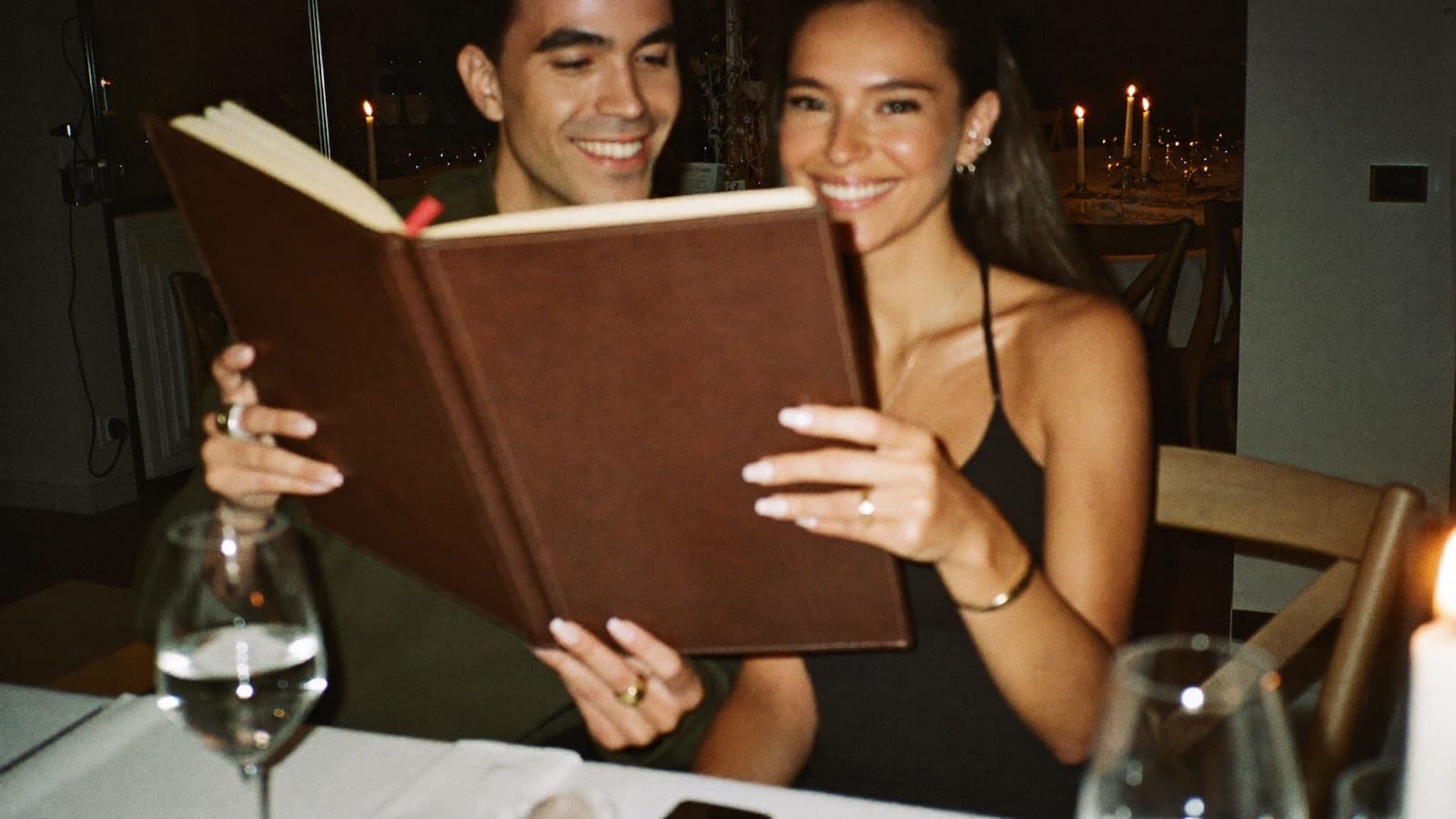
A restaurant wine list is designed to help you choose a bottle. In practice, it often feels like it was designed to make you sweat.
Pages of unfamiliar names. Prices ranging from $30 to $300 with no clear explanation for the difference. Terms in Italian, French, and Spanish that you definitely can't pronounce while maintaining eye contact with your date. The server is approaching. The clock is ticking.
Take a breath. By the end of this guide, you'll be able to crack open any wine list and land on a solid pick in about two minutes. No wine degree required.
How Wine Lists Are Organized
Every wine list follows one of three structures. Recognizing the format immediately tells you where to look and how to navigate.
Organized by Varietal
This is the most common format in casual to mid-range American restaurants. You'll see headers like Chardonnay, Sauvignon Blanc, Pinot Noir, Cabernet Sauvignon, and maybe a section for Rosé and Sparkling.
This format is the easiest to work with because it lets you jump straight to a grape you already know you like. If you're a Pinot Noir person, you scan that section, find three options, compare prices, and you're done.
Organized by Region
Upscale restaurants and wine-focused spots tend to organize by geography: France, Italy, California, Spain, Oregon. Within each region, wines may be further sorted by subregion (Burgundy, Bordeaux, Rhône).
This rewards knowledge. If you know that Sancerre means Sauvignon Blanc from the Loire Valley, or that Barolo is Nebbiolo from Piedmont, a region-based list becomes a treasure map. If you don't know those things yet, it can feel like a foreign-language exam. That's what your server is for.
Organized by Style or Body
The newest trend, and arguably the most user-friendly. You'll see sections like "Light & Crisp," "Rich & Full," "Bold & Structured," or "Bright & Fruity."
If a restaurant does this, they're signaling that they want you to feel comfortable. Trust that signal. Pick the style that matches your mood and your meal, and you've already eliminated 75% of the list.
Where the Value Actually Lives
Here's what most people don't know about wine list pricing: the cheapest bottle is almost never the best deal, and the most expensive bottle is rarely the best wine on the list.
The Second-Cheapest Trap
The most commonly ordered bottle at any restaurant is the second-cheapest on the list. Restaurants know this. Some deliberately place a high-margin, underwhelming wine in that exact position. You're not getting a deal. You're getting what they most want to sell you.
This doesn't mean you should never order the second-cheapest bottle. Just don't default to it.
The Middle Third Is Where You Want to Be
The real value on most wine lists sits in the middle third of the price range. Here's why:
The bottom third is where restaurants put crowd-pleasers and high-margin wines from large producers. These wines are reliable but rarely exciting. The top third is where prestige bottles live, wines that cost more because of brand recognition, scarcity, or vineyard pedigree. The premium you're paying is often for the name, not proportionally better liquid in the glass.
The middle third is where sommeliers and wine directors place the wines they're genuinely excited about. These are bottles from interesting producers, undervalued regions, or emerging styles that deliver more than their price suggests. This is where the wine program shows its personality.
Sommelier's Picks and Staff Favorites
Many lists include a section marked "Sommelier's Selection," "Staff Picks," or wines highlighted with a star or special designation. Pay attention to these. They're usually wines the team is genuinely enthusiastic about, often from smaller producers that overdeliver at their price point.
These picks also tend to be wines the restaurant bought in smaller quantities, which means they're less likely to be the high-margin bulk wines filling the bottom of the list.
Understanding Restaurant Wine Markup
Knowing how restaurants price wine takes the mystery out of that $60 price tag and helps you spot where the real deals hide.
The Standard Markup
Most restaurants mark up wine bottles 2.5 to 4 times their wholesale cost. A bottle the restaurant bought for $12 wholesale might appear on the list at $36 to $48. This markup covers overhead: glassware, storage, service, the sommelier's salary, and the cost of holding inventory that ties up cash.
By-the-glass pours carry even higher markups. A standard 5-ounce glass is typically priced at or near the restaurant's wholesale cost for the entire bottle. So if the restaurant paid $12 for the bottle and pours five glasses from it, they might charge $12 to $15 per glass. That's a 400-500% markup on the full bottle.
Where the Deals Hide
Lesser-known regions. Wines from Portugal, Spain's interior, Southern France (Languedoc, Roussillon), Greece, and Argentina tend to carry lower markups because they have less name recognition. Customers are less likely to comparison-shop a Douro red than a Napa Cabernet, so restaurants can price them more aggressively.
House wines that aren't called "house wine." Some restaurants have a featured wine or a pour they're particularly proud of that's priced to move. Ask your server: "What are you pouring a lot of right now?" That wine usually offers great value.
Half-bottles. When available, half-bottles (375ml) give you variety without committing to a full bottle. The per-ounce cost is slightly higher than a full bottle, but lower than buying two glasses. They're the sweet spot for couples who want different wines with different courses.
Wines from the previous vintage. If a list has two vintages of the same wine, the older one is sometimes priced to clear. Ask about it.
The By-the-Glass Section Decoded
The by-the-glass list is typically a curated selection of 8 to 15 wines that the restaurant rotates regularly. It serves a specific purpose: letting you taste different wines, match wines to individual courses, or drink lightly without committing to a bottle.
What the Glass List Tells You
The by-the-glass selection reveals the restaurant's priorities and style. A list heavy on natural wines tells you one thing. A list dominated by California Cabernet tells you something different. The glass pours are the restaurant's personality on display.
If you're unsure what to order, starting with a glass is a smart move. It buys you time to study the bottle list, gives you a wine to sip while deciding on food, and puts zero pressure on the decision.
The Math That Matters
A standard bottle yields about five 5-ounce glasses. If a glass costs $14 and the bottle costs $48, the bottle becomes the better deal at three or more glasses of the same wine. Two glasses costs $28 (more than half the bottle price for less than half the wine). Three glasses costs $42 (close to bottle price for only three-fifths of the wine).
If two or more people at the table want the same style of wine, check whether a bottle of something similar is available. You'll almost always come out ahead.
Reading Between the Lines
Vintage Dates
For most wines under $60 on a restaurant list, vintage doesn't matter much. These wines are made for near-term drinking, and the difference between 2022 and 2023 is negligible.
For more expensive wines (Burgundy, Bordeaux, Barolo, top Napa Cabernet), vintage can matter significantly. If you're spending real money and know the region, a quick mental check of the vintage is worthwhile. If you don't know vintages, ask your server: "Was this a good year for Burgundy?" They'll know.
Unusual Grapes and Regions
If a wine list includes grapes you've never heard of (Trousseau, Nerello Mascalese, Godello, Assyrtiko) or regions that don't ring a bell (Jura, Etna, Bierzo, Santorini), that's usually a sign of a thoughtful wine program. These are the wines the team chose because they're interesting and delicious, not because they're safe and familiar.
Don't shy away from these. Point to one and ask your server about it. You'll often get the most enthusiastic description of the night, and you might discover something that becomes your new favorite.
The "By the Glass" Rotation Trick
Restaurants change their by-the-glass selections regularly. If you visit a restaurant more than once, try whatever's new on the glass list. It's the easiest way to expand your palate without any risk greater than one glass.
The Two-Minute Wine List Strategy
Here's the practical system. You're sitting down. The list is in your hands. The clock starts.
0:00-0:15 — Identify the format. Is it organized by varietal, region, or style? Now you know how to navigate.
0:15-0:45 — Pick your lane. Red, white, or sparkling? This eliminates half the list immediately.
0:45-1:15 — Find the middle third of the price range. Don't count every wine. Glance at the cheapest and most expensive bottles in your category, mentally find the midpoint, and focus there.
1:15-1:45 — Pick two or three candidates. You don't need to know them. You just need options to discuss.
1:45-2:00 — Flag your server. Point to your candidates and say: "I'm deciding between these. Which one would you go with tonight?" or "What pairs best with what we're ordering?"
That's it. Two minutes, and you've made a confident, informed choice that doesn't rely on defaulting to the second-cheapest option or the one name you recognize.
When All Else Fails
If the list is genuinely overwhelming, if it's 30 pages of Burgundy and you can't tell Gevrey-Chambertin from Chambolle-Musigny, here are three failsafe moves:
Ask for the sommelier or wine director. At any serious wine restaurant, there's someone whose entire job is helping you find a great bottle. Use them. Say: "I'm looking for a medium-bodied red around this price point that goes with lamb. What would you pour?" That's enough information for any competent wine professional to find you something excellent.
Order the "weird" bottle. If one wine on the list is from a region or grape you've never seen before, and it's in your price range, order it. Restaurants put unusual wines on their list because someone on the team loves them. You're more likely to be delighted by the unexpected pick than by the safe one.
Start with bubbles. When you genuinely can't decide, a glass of sparkling wine is always the right opening move. It pairs with everything, it sets a celebratory tone, and it gives you time to figure out what you actually want to drink with your main course.
The wine list isn't a test. It's a menu. And like any menu, it's there to help you find something you'll enjoy. Read the structure, aim for the middle, talk to your server, and stop worrying about getting it "right." There's no wrong answer when the glass is full and the company is good.