

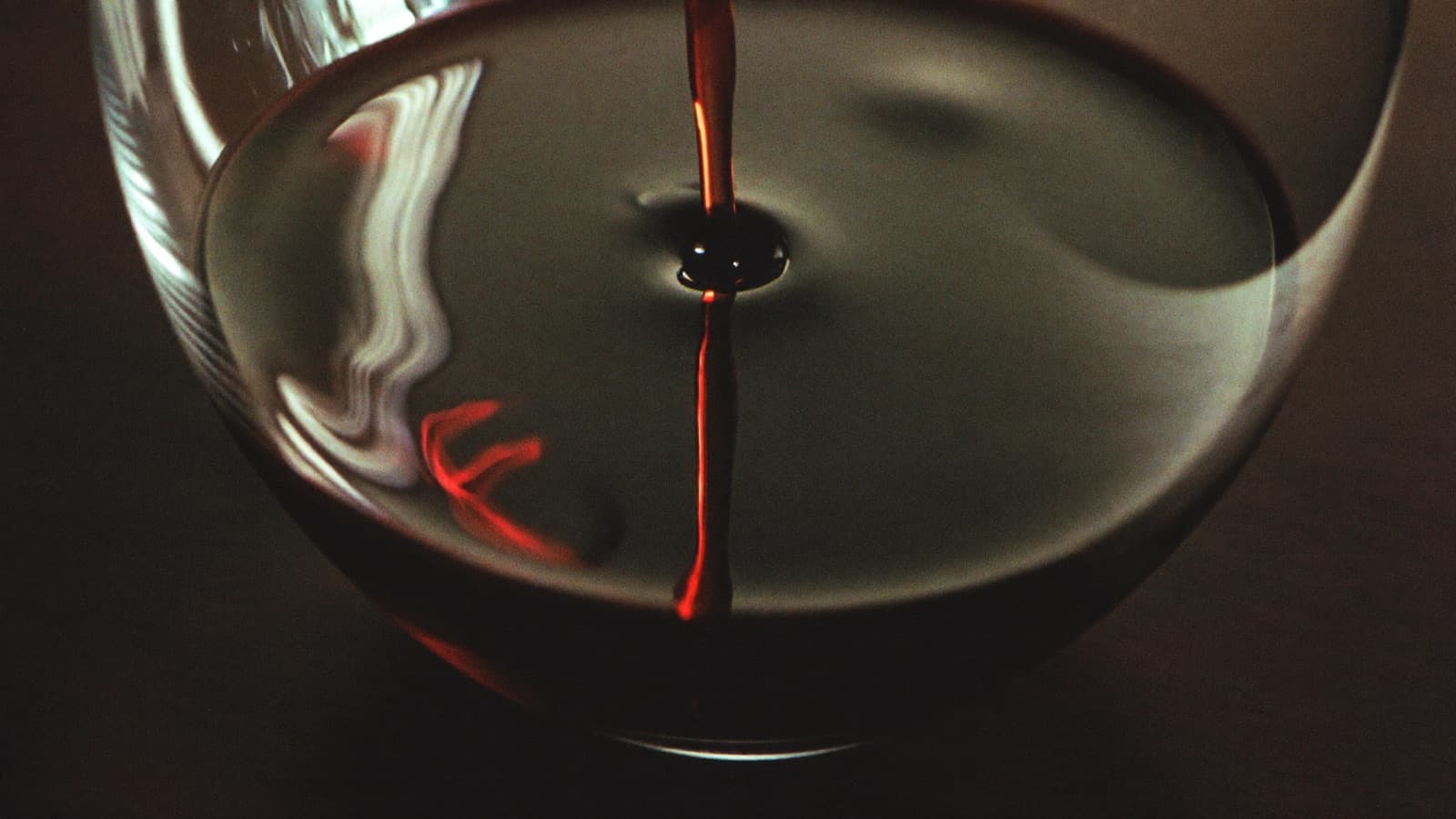
You take a sip of Cabernet Sauvignon and your mouth goes dry. Not "I need water" dry. More like "someone sucked all the moisture out of my cheeks" dry. Your tongue feels rough. Your gums tighten. The wine tastes bitter, astringent, and kind of aggressive.
That's tannin. And once you understand it, that same sensation goes from unpleasant to essential. Tannin is the backbone of great red wine, the reason a steak tastes better with Cabernet, and the key to understanding why some wines age for decades while others are best opened tonight.
What Tannin Actually Is
Tannin is a naturally occurring polyphenol compound found in plants. It's in tea leaves, dark chocolate, walnuts, pomegranate skins, and unripe fruit. Anywhere nature wants to protect plant tissue from being eaten too early, tannin shows up.
In wine, tannin comes from three main sources:
Grape skins. Red wine gets its color from extended contact with grape skins during fermentation. During that same contact, tannins leach into the juice. The longer the skin contact, the more tannin in the wine. This is why red wines have tannin and most white wines don't: white wines are pressed off the skins before fermentation, so the tannins never make it into the juice.
Grape seeds. Seeds contain tannin too, though winemakers try to avoid excessive seed tannin because it tends to taste harsher and more bitter than skin tannin. Gentle pressing and careful fermentation management keep seed tannin in check.
Oak barrels. When wine ages in oak, tannin from the wood leaches into the wine. Oak tannin tends to be smoother and rounder than grape tannin. It also contributes vanilla, spice, and toast flavors. This is why an oaked Cabernet often feels softer than an unoaked one, even though the oak is adding tannin. The type of tannin matters as much as the amount.
How to Recognize Tannin
You don't taste tannin so much as feel it. It's a tactile sensation, not a flavor.
The tea test. If you've ever steeped a black tea bag for too long, you've experienced tannin. That mouth-drying, slightly bitter, astringent sensation? That's exactly what tannin feels like in wine. Over-steeped tea is actually the perfect reference point because the mechanism is identical: tannin molecules bind to proteins in your saliva, reducing the lubricating effect and making your mouth feel dry and textured.
Where you feel it. Tannin registers primarily on your gums, the insides of your cheeks, and the middle of your tongue. Acidity hits the sides of your tongue and makes you salivate. Tannin does the opposite: it creates a drying, gripping sensation across the soft tissue of your mouth.
The spectrum. Tannin ranges from barely perceptible (silky, smooth, light) to extremely pronounced (grippy, chewy, aggressive). Most red wines fall somewhere between these extremes. Learning to identify where a wine sits on the tannin spectrum is one of the fastest ways to sharpen your palate.
High-Tannin Wines vs. Low-Tannin Wines
Different grapes have naturally different tannin levels. Knowing the general range helps you predict how a wine will feel before you even open the bottle.
High-Tannin Wines
These are the big, structured reds that demand attention (and often food alongside them):
Cabernet Sauvignon is the benchmark for tannin. Thick-skinned grapes plus extended maceration plus new oak aging equals firm, grippy, mouth-coating tannin. Young Cabernet can be almost abrasive, which is why it ages so well: all that tannin softens over time.
Nebbiolo (the grape behind Barolo and Barbaresco) has some of the most intense tannins in the wine world, combined with high acidity. Young Nebbiolo can feel like it's stripping the enamel off your teeth. Give it time (or a lot of food), and it becomes one of the most elegant, complex wines on earth.
Tannat (from Southwest France and Uruguay) is literally named after tannin. If you want to experience tannin at full volume, find a young Tannat.
Syrah/Shiraz delivers firm tannins with dark fruit intensity. Australian Shiraz tends to be riper and slightly softer, while Northern Rhône Syrah (Cornas, Hermitage) runs leaner and more structured.
Mourvèdre (Monastrell in Spain) produces dark, tannic wines with earthy, meaty character. Often blended with softer grapes to balance its grip.
Low-Tannin Wines
These are the approachable, easy-drinking reds that work even without food:
Pinot Noir is the most popular low-tannin red. Thin skins mean less tannin extraction. The result is a silky, smooth wine with bright fruit and gentle structure. It's the red wine for people who think they don't like red wine.
Gamay (the grape of Beaujolais) produces juicy, fruit-forward wines with minimal tannin. Beaujolais-Villages and Beaujolais Cru wines are some of the most refreshing reds you can drink, especially slightly chilled.
Grenache has thin skins and naturally low tannin. It's soft, fruity, and round. In blends (like Côtes du Rhône), it provides the plush fruit while Syrah and Mourvèdre bring the structure.
Barbera from Piedmont delivers bright acidity and dark fruit with very little tannin. It's the Italian workhorse red that goes with everything on the table.
The Quick Reference
| Tannin Level | Grapes | What to Expect |
|---|---|---|
| High | Cabernet Sauvignon, Nebbiolo, Tannat, Mourvèdre | Grippy, drying, structured. Wants food or aging. |
| Medium-High | Syrah/Shiraz, Malbec, Tempranillo, Sangiovese | Firm but approachable. Versatile with food. |
| Medium | Merlot, Zinfandel, Carménère | Moderate grip with round fruit. |
| Low-Medium | Grenache, Barbera, Dolcetto | Soft, fruity, easy to drink. |
| Low | Pinot Noir, Gamay | Silky, smooth, minimal drying. |
Why Tannin Matters for Food Pairing
Tannin is the reason red wine and steak are inseparable. It's not tradition or marketing. It's chemistry.
Tannin binds to protein. When you eat protein-rich food (steak, lamb, hard cheese), the proteins in the food bind to tannin molecules in the wine, preventing them from binding to the proteins in your saliva. The result: the wine feels softer, smoother, and less astringent. The food, in turn, tastes richer and more flavorful. Both the wine and the food become better versions of themselves.
Fat cuts tannin. Fatty foods (marbled steak, rich cheese, duck confit) coat your mouth with a lipid layer that buffers the drying effect of tannin. This is why a young, tannic Barolo that feels harsh on its own becomes velvety alongside braised short ribs.
The reverse is also true. If you drink a tannic Cabernet with a light salad or delicate fish, the tannin overwhelms the food. The wine tastes harsh and the food tastes like nothing. Matching the weight of the wine to the weight of the food keeps both in balance.
Practical rules:
- High-tannin wine + fatty red meat = great pairing
- High-tannin wine + rich hard cheese = great pairing
- High-tannin wine + delicate fish = bad pairing
- Low-tannin wine + lighter proteins (chicken, salmon) = good pairing
How Tannin Changes Over Time
Tannin is the engine behind wine aging. Over years and decades, tannin molecules link together into longer chains. These longer chains are too large to bind effectively to your saliva proteins, so the wine feels progressively softer and smoother.
A young Barolo with aggressive, cheek-gripping tannin can evolve into a 20-year-old Barolo with tannin so fine it feels like silk. The tannin hasn't disappeared. It's polymerized into a different structure that your palate perceives as elegance rather than aggression.
This is why wines with high tannin have the greatest aging potential. Pinot Noir, with its low tannin, is generally best within 5-10 years. Cabernet Sauvignon and Nebbiolo can age for 20-40 years because the tannin framework supports that evolution.
How to Soften Tannin Right Now
If you've opened a young, tannic red and it's too aggressive, you have options.
Decanting. Pouring wine into a decanter exposes it to oxygen, which softens tannin by triggering micro-oxidation. For a young Cabernet or Barolo, even 30-60 minutes in a decanter makes a noticeable difference. If you don't have a decanter, pour the wine into a large pitcher, jar, or even a blender (seriously, "hyperdecanting" works, though wine purists will object).
Waiting in the glass. Even swirling your glass and letting it sit for 15-20 minutes while you eat your appetizer allows some tannin softening. The wine will taste different at the end of the glass than it did at the beginning.
Food. This is the most natural tannin softener. If a wine feels too tannic, eat something rich and protein-heavy alongside it. A piece of aged Parmesan or a bite of steak immediately changes how the wine feels.
Time in the bottle. If you've bought a case, open one bottle now and save the rest. Each year, the tannin will be slightly softer and more integrated.
Tannin and White Wine
Most white wines have negligible tannin because they're made without skin contact. But there are exceptions.
Orange wine (white grapes fermented with their skins, like a red wine) develops noticeable tannin. If you've tried an orange wine and found it grippy and textured, that's skin tannin in action.
Heavily oaked Chardonnay can pick up some tannin from the barrels, though it's subtler than grape tannin. You might notice it as a slight drying quality on the finish of a big, barrel-aged white Burgundy.
The Bottom Line
Tannin isn't a flaw. It's a feature. It gives red wine its structure, its aging ability, and its partnership with food. A wine with no tannin is like a building with no frame: it might look nice, but it won't stand up to time or pressure.
If tannin has been the barrier keeping you from enjoying big reds, try this: order a glass of Cabernet at your next steak dinner. Alternate bites of meat with sips of wine. You'll feel the tannin melt away against the protein, and the wine will reveal layers of fruit, spice, and complexity that the tannin was guarding all along.
Tannin isn't the enemy. It's the bouncer. And once you're past the door, the party is excellent.