

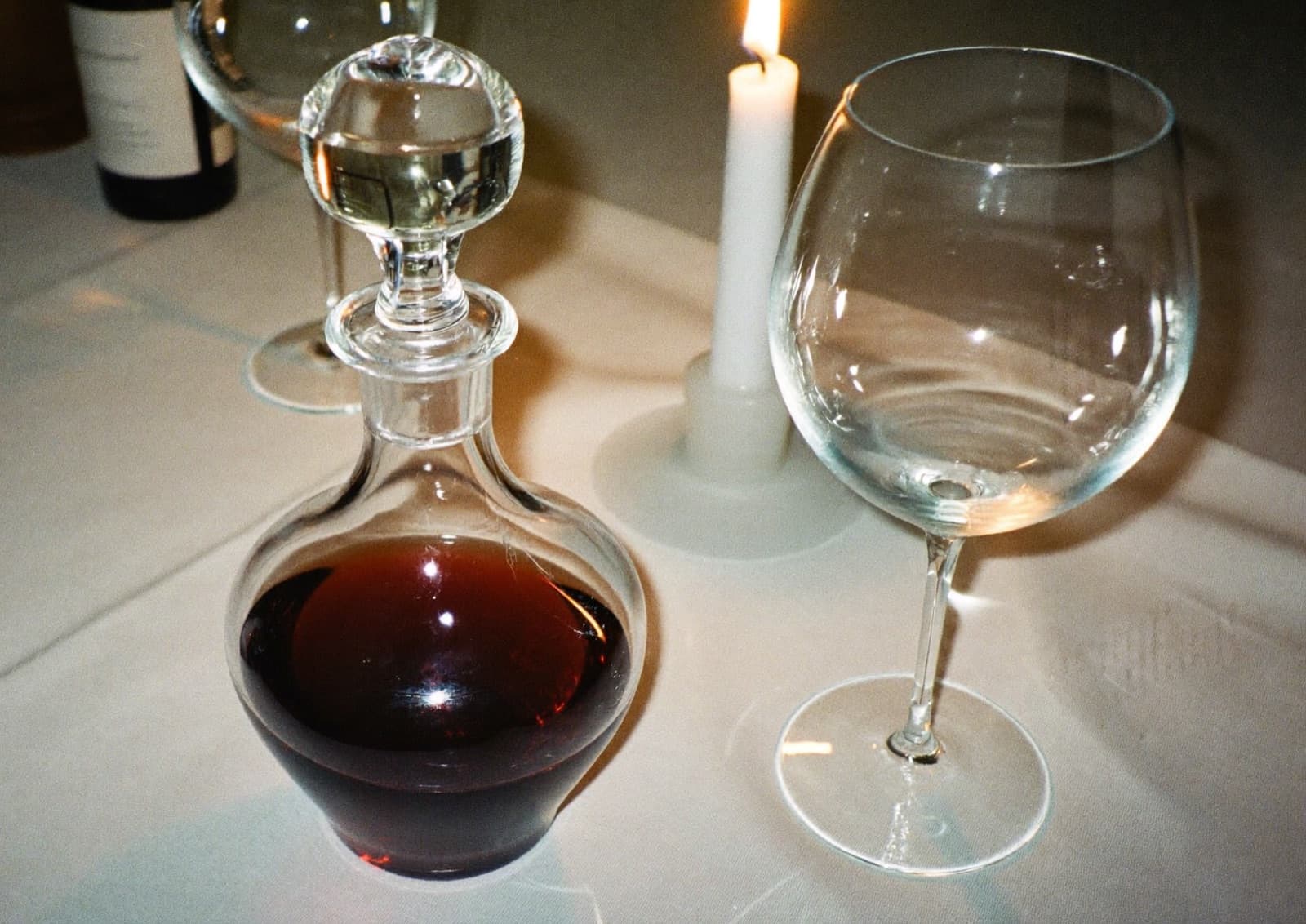
Here's a trick that will change how you look at every restaurant wine list from this point forward.
Scan the reds. Look for one name: Châteauneuf-du-Pape.
If it's there, you're probably in good hands. Not because CDP is some magical unicorn wine that only the anointed can acquire. It's not rare. It's not impossibly expensive. But it's specific enough, interesting enough, and just outside the mainstream enough that its presence on a wine list tells you something important: somebody behind that list is paying attention.
A restaurant that bothers to stock Châteauneuf-du-Pape didn't just call the Sysco wine rep and say "give me whatever's popular." Someone tasted wines. Someone thought about their menu. Someone decided their guests deserved more than Cabernet, Pinot Noir, and Malbec on repeat.
That's the hack. But the reason CDP earns this spot as a wine list signal is the wine itself. It's one of the most storied, complex, and genuinely fascinating wines on the planet. And the story starts with a Pope who got tired of Rome.
The Pope Moves to France (Yes, Really)
In 1309, Pope Clement V did something that rocked the Catholic world: he moved the papacy from Rome to Avignon, a city in southeastern France along the Rhône River. This wasn't a weekend getaway. The papal court stayed in Avignon for nearly 70 years, a period historians call the Avignon Papacy (or, less charitably, the Babylonian Captivity of the Church).
Clement V was originally from Bordeaux, so he already knew a thing or two about French wine. But it was his successor, Pope John XXII, who really put the region's wine on the map. John XXII built a summer castle just north of Avignon, in a small village that would become known as Châteauneuf-du-Pape. Translated literally: the Pope's new castle.
The Pope didn't just live there. He planted vineyards. He invested in winemaking. He essentially created the first celebrity endorsement in wine history, seven centuries before anyone put a rapper's name on a champagne label.
When the papacy eventually returned to Rome in 1377, the vineyards remained. The reputation grew. And the wine that emerged from those sun-blasted, stone-covered fields became one of France's greatest contributions to the drinking world.
Why the Wine Itself Is Remarkable
Most wine regions are defined by a single grape or maybe two. Napa means Cabernet. Burgundy means Pinot Noir and Chardonnay. Barolo means Nebbiolo. Simple.
Châteauneuf-du-Pape throws that playbook out the window. The appellation allows thirteen different grape varieties in a single blend. Thirteen. Some producers use three or four. Others use all thirteen. A few rebels use just one. This is controlled chaos with structure, and it produces wines that taste like nothing else.
Here are the permitted grapes:
Red varieties: Grenache, Syrah, Mourvèdre, Cinsault, Counoise, Muscardin, Vaccarèse, Terret Noir
White varieties (yes, they can go in the red blend): Clairette, Bourboulenc, Roussanne, Picpoul, Picardan
Grenache is the backbone of almost every Châteauneuf-du-Pape. It typically makes up 60-80% of the blend, providing the wine's generous fruit, warm spice, and that signature roundness that makes CDP so approachable even when it's serious. Syrah adds structure and dark fruit. Mourvèdre brings earthiness and depth. Everything else is seasoning, each grape contributing a small but meaningful dimension to the final wine.
This is a fun fact to teach anyone, by the way. Kids, friends, skeptical in-laws who think wine is pretentious. Telling someone that one wine can be made from thirteen different grapes immediately makes wine feel more interesting and less like homework.
The Stones That Store the Sun
If you've ever seen a photo of a Châteauneuf-du-Pape vineyard, you probably noticed the rocks before the vines. The most famous vineyards in the appellation are covered in large, smooth, pale stones called galets roulés. These are ancient river rocks, deposited by the Rhône over millions of years, and they do two critical things.
First, they absorb heat from the intense southern French sun during the day, then radiate it back up to the vines at night. This extends the ripening period and helps Grenache reach full maturity, which is essential because under-ripe Grenache is thin and forgettable while fully ripe Grenache is magnificent.
Second, the stones prevent moisture from evaporating too quickly, helping the vines survive the dry Mediterranean summers. They also force roots to dig deep into the clay and limestone underneath, which adds mineral complexity to the wine.
Not every vineyard in the appellation has these dramatic stone fields. The terrain varies significantly across the roughly 8,000 acres under vine. Some parcels sit on sandy soils, others on red clay, others on pure limestone. This variation is one reason why Châteauneuf-du-Pape from different producers can taste remarkably different even though they're all following the same rules.
What It Actually Tastes Like
If you've never had a Châteauneuf-du-Pape, here's what to expect.
A good CDP is warm, generous, and layered. Think ripe raspberry and cherry, dried herbs (lavender, thyme, rosemary, basically the entire hillside), black pepper, a touch of leather, and often something almost meaty or savory underneath. The alcohol tends to run high, usually 14-15%, but the best examples carry it gracefully because the fruit and complexity balance the heat.
Young Châteauneuf-du-Pape is fruit-forward and exuberant. With five to ten years of age, things get interesting: the fruit recedes slightly, and you start getting dried fig, tobacco, mushroom, and that elusive quality wine people call "garrigue," the scent of the wild scrubby herbs that grow across the hills of southern France.
Great CDP from top producers (Château Rayas, Château Beaucastel, Domaine du Vieux Télégraphe, Clos des Papes, among others) can age for 20-30 years and develop an almost Burgundian complexity, which is wild for a wine that starts life as a bold, sun-drenched Rhône red.
There's also white Châteauneuf-du-Pape, made from Roussanne, Grenache Blanc, Clairette, and Bourboulenc. It represents only about 5-7% of total production and rarely shows up on restaurant lists, but if you spot it, order it. It's rich, textural, and unlike any other white wine you've had.
The First Appellation Rules in France
Châteauneuf-du-Pape has another claim to fame that wine nerds love. In 1923, Baron Pierre Le Roy de Boiseaumarié, a local winemaker and lawyer (a dangerous combination), established the first set of rules governing how wine could be produced in the region. These rules predated France's national AOC (Appellation d'Origine Contrôlée) system by over a decade and essentially served as the template for how French wine law works today.
Le Roy's rules specified which grape varieties could be planted, minimum alcohol levels (12.5%, high for the time), pruning methods, and even required that harvested grapes be sorted and any unripe or damaged fruit be discarded. He called it the "triage," and it's now standard practice across fine winemaking worldwide.
He also did something bizarre and wonderful: he decreed that no UFOs were allowed to land in the vineyards. This was written into the actual appellation law in 1954 and technically remains on the books today. Whether this was a publicity stunt, a response to a genuine UFO panic, or just a Frenchman's dry humor is up for debate. But it tells you something about the character of the region.
Back to the Wine List: Why It Matters
So why does finding Châteauneuf-du-Pape on a restaurant wine list tell you the program is legit?
It requires intention. CDP isn't a default selection. Wine distributors don't push it the way they push California Cab or New Zealand Sauvignon Blanc. A restaurant has to specifically seek it out, which means someone made a deliberate choice.
It suggests depth of knowledge. A buyer who stocks Châteauneuf-du-Pape likely understands the Rhône Valley, which means they probably understand Burgundy, Bordeaux, and a few other regions that reward curiosity. The whole list is probably more thoughtful than average.
It pairs brilliantly with restaurant food. CDP's combination of fruit, herbs, spice, and moderate tannin makes it one of the most versatile food wines at the table. It handles grilled meats, roasted vegetables, lamb, game, hard cheeses, and even hearty pasta. A restaurant that stocks it knows their food and knows what works with it.
It occupies a sweet spot in pricing. Good Châteauneuf-du-Pape on a restaurant list typically runs $60-$120 a bottle. That's above the bottom of the list (so they're not just stocking cheap crowd-pleasers) but well below the trophy wines (so they're not just showing off). It's a practical luxury. The kind of wine a restaurant stocks because they want you to drink well, not because they want to pad the bill.
It signals confidence. Plenty of diners don't know what Châteauneuf-du-Pape is. Putting it on the list means the restaurant trusts its staff to sell it and trusts its customers to try something unfamiliar. That confidence usually extends to the rest of the wine program.
This isn't foolproof. A wine list can have CDP and still be mediocre everywhere else. But in practice, it's one of the most reliable quick reads you can do. It takes two seconds. Scan the reds, look for the name, and if it's there, you're probably about to drink well.
What to Order When You Find It
If the CDP on the list is by the glass, order it. Full stop. By-the-glass Châteauneuf-du-Pape means the restaurant is serious about rotating interesting options through their glass program.
If it's by the bottle and you're eating anything from steak to roasted chicken to a charcuterie board, it's a strong pick. Ask your server what producer it is. If it's a name like Beaucastel, Vieux Télégraphe, Clos des Papes, Domaine de la Janasse, or Château la Nerthe, you're in excellent territory.
If you're feeling adventurous and the list has multiple Rhône options, compare the CDP to a Gigondas or Vacqueyras sitting nearby. These are neighboring appellations that use similar grapes at lower prices. The sommelier will light up if you ask about the comparison, and you'll learn something real about how terroir works without reading a single textbook.
And if the wine list doesn't have Châteauneuf-du-Pape? That's fine. It doesn't mean the restaurant is bad. But it does mean you've lost your shortcut and need to do a bit more detective work. Check our guide on how to read a wine list for the full toolkit.
The Two-Second Wine List Hack
Next time you sit down at a restaurant and they hand you the wine list, do this:
- Flip to the reds.
- Look for Châteauneuf-du-Pape.
- If it's there, relax. Someone's minding the store.
Behind that one wine is 700 years of papal ambition, thirteen grape varieties, sun-baked stones, a French baron who banned UFOs, and a winemaking tradition that set the template for an entire country's wine laws. It's a wine with a story worth telling over dinner, and a signal that the restaurant cares about giving you one worth drinking.
That's the kind of detail that turns a meal into a memory. And honestly, that's what Raging Wine is all about.