

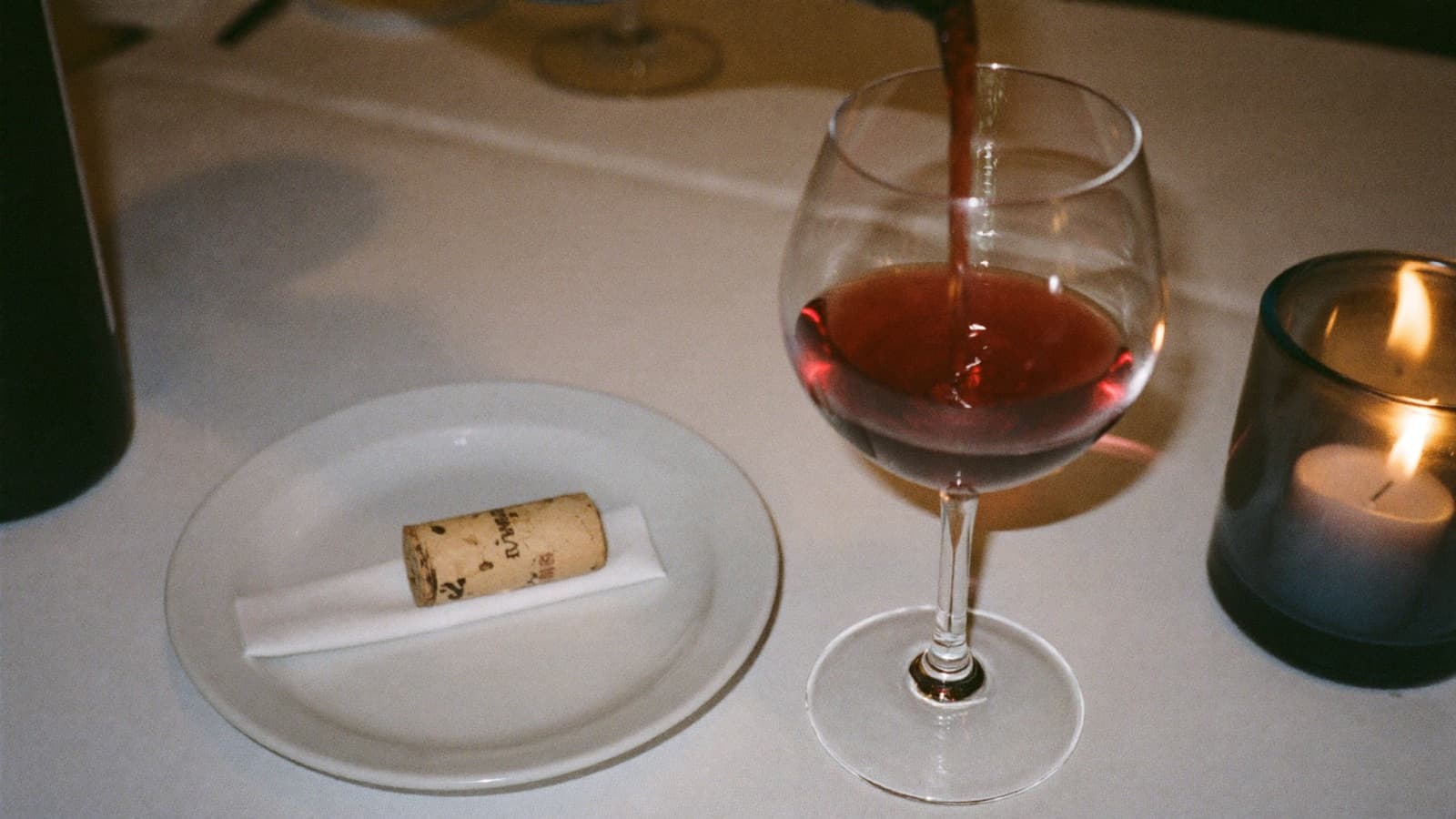
You order a bottle at a restaurant. The server pours you a taste. You swirl, sniff, and… something's off. It smells a little like a damp basement, or wet cardboard, or your grandmother's attic. But everyone's watching, you're not sure, so you nod, they fill the glasses, and you spend the next hour drinking a wine that was never going to taste right.
This happens constantly. The wine was almost certainly corked, one of the most common faults in wine — and one almost nobody outside the trade knows how to catch. Learning to spot it (and what to do about it) is one of the highest-value wine skills you can pick up. Let's fix this.
What "Corked" Actually Means
First, the big misconception: a corked wine has nothing to do with bits of cork floating in your glass. If you get a little cork debris from a crumbly cork, that's cosmetic — fish it out, the wine is fine. "Corked" is something else entirely.
A corked wine is contaminated with a chemical compound called TCA (2,4,6-trichloroanisole). It forms when natural compounds in cork interact with chlorine and mold, and even microscopic amounts taint the wine. It's completely harmless to drink — it just makes the wine smell and taste wrong.
And it's not rare. Industry estimates put cork taint at a few percent of all bottles sealed with natural cork. That means if you drink wine regularly, you've definitely had corked bottles — you just didn't have a name for what was wrong. (It's also a big reason so many producers switched to screwcaps, which can't get corked at all.)
How to Tell If a Wine Is Corked
TCA does two things, and you're smelling for both.
It adds a musty, moldy smell. The classic descriptors: wet cardboard, damp basement, musty newspaper, a moldy dishrag, wet dog. If the wine smells more like a cellar than like fruit, that's the tell.
It strips the fruit away. Even before the mustiness becomes obvious, TCA mutes a wine. It goes flat, dull, and hollow — the fruit you'd expect is just gone, like someone turned the volume down.
Severity varies. A badly corked bottle is unmistakable — it reeks. A mildly corked one is sneakier: the wine isn't foul, it's just oddly muted and lifeless, and you might blame yourself or the wine instead of the cork. A good rule: if a wine smells like a damp basement instead of like wine, trust your nose. You're probably right.
This is exactly what that little taste-pour ritual at a restaurant is for. It's not theater and it's not about whether you "like" the wine — it's your chance to check the bottle isn't faulty before the whole table is poured.
Corked Is Not the Only Fault
"Corked" gets used as a catch-all, but it's one specific thing. Knowing the others makes you far more credible when you flag a bottle:
- Oxidized: Too much air got in. The wine tastes flat, stale, and sherry-like, often with a browned color. A legitimate fault.
- Cooked / heat-damaged: The bottle got too hot in shipping or storage. Stewed, jammy, flat fruit — sometimes the cork is pushed up or the bottle has leaked. A legitimate fault.
- Reduction: Smells like a struck match, rotten egg, or burnt rubber. The good news: reduction often blows off with a few minutes of air and a vigorous swirl. Give it a chance before you condemn it.
- Brett: A barnyard, band-aid, or sweaty-saddle note. Divisive — a little adds complexity to some reds, a lot is a flaw. Not something to send back unless it's overwhelming.
The honest dividing line: corked, oxidized, and cooked are faults worth sending back. Reduction is usually fixable in the glass. And "I don't actually like this style" is not a fault — more on that below.
How to Send a Bottle Back (Without the Awkwardness)
Here's the part that changes your restaurant life. If a bottle is faulty, you are completely entitled to send it back, and a good restaurant wants you to.
A corked bottle isn't anyone's fault. It's a lottery loss baked into natural cork, and the restaurant gets credited by its distributor when it returns a faulty bottle. You're not complaining or trying to scam a free drink — you're catching a defect, which the staff would rather know about than have you quietly resent.
The script is simple and calm:
"I think this might be corked — would you mind tasting it?"
That's it. No drama, no accusation. Hand it to the server or sommelier and let them taste. They'll either agree and bring a fresh bottle (or a new selection if it's the last of that wine), or they'll taste it, gently explain it's actually the style, and you've still learned something. Either way you come off as someone who knows wine, not someone causing a scene.
A few specifics:
- Flag it early if you can. The taste-pour is the moment — smell it then. But if a subtle taint only becomes obvious a glass in, it's still fine to say something.
- What you can't send back: "I changed my mind," "it's bolder than I expected," or "I don't love it." Faulty is returnable; buyer's remorse isn't. (The fix for that is ordering well in the first place — ask questions before you commit. See how to order wine and how to talk to a sommelier.)
- At home or from a shop: Most good wine retailers will replace a corked bottle if you bring back the bottle, the cork, and your receipt — even mostly empty. They get credited too.
The Bottom Line
A corked bottle used to be a quiet tax on people who didn't know better — a ruined wine, a worse meal, and no idea why. Now you know the smell (wet cardboard, damp basement, stripped-out fruit), you know it's common, you know it's harmless, and you know the exact words to fix it.
Smell every taste-pour like you mean it. If something's off, say so — politely, confidently, and without apology. The wine you save might be a $90 bottle, but the real upgrade is never again sitting through a meal with a wine you knew, deep down, was wrong.