

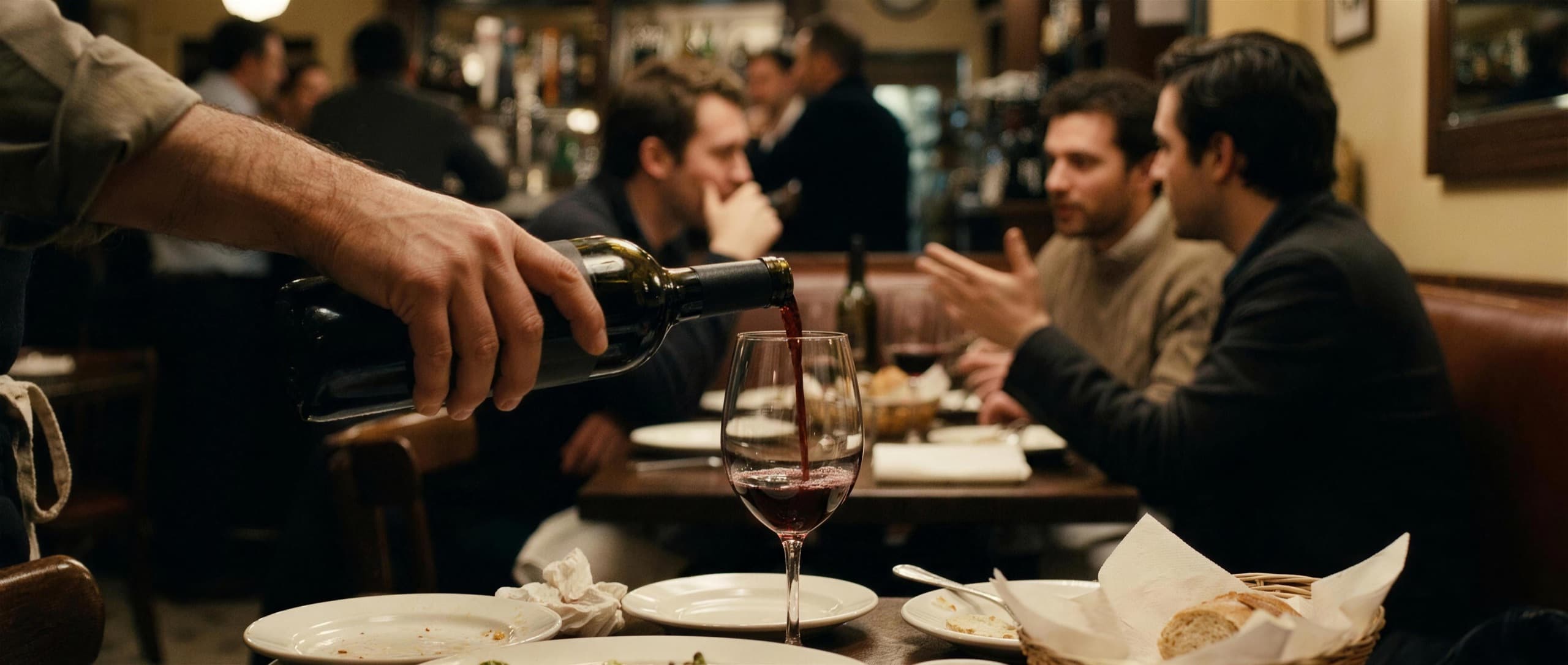
You're at a nice restaurant. The server hands you a wine list the size of a short novel. Your date is watching. Your boss is waiting. The table next to you just ordered something that sounded French and expensive.
Your palms are a little sweaty. That's normal.
Here's the thing: ordering wine at a restaurant is not a test. Nobody is grading you. The sommelier is not silently judging your pronunciation of Gewürztraminer (it's guh-VURTS-trah-mee-ner, by the way). And the entire ritual that surrounds wine service exists to help you, not trip you up.
This guide walks you through the whole process, from cracking open that list to clinking glasses. No wine degree required.
How Restaurant Wine Lists Are Organized
Most wine lists follow one of three structures. Knowing which one you're looking at saves you from that glazed-eye moment where you pretend to read while actually panicking.
By varietal is the most common format in the U.S. You'll see headers like Chardonnay, Sauvignon Blanc, Pinot Noir, Cabernet Sauvignon. This is the easiest to navigate because you can jump straight to a grape you recognize.
By region is more common at upscale restaurants. Wines are grouped under France, Italy, California, Oregon, etc. This rewards wine knowledge but can feel intimidating if you don't know that Sancerre means Sauvignon Blanc or that Barolo means Nebbiolo.
By body or style is the newest trend and arguably the most user-friendly. You'll see sections labeled "Light & Crisp," "Bold & Rich," or "Bright & Fruity." If a restaurant organizes their list this way, they're telling you they want you to feel comfortable. Trust that signal.
How to Narrow Down the List Fast
A 200-bottle wine list doesn't require you to evaluate 200 bottles. Here's how to cut it down to three or four candidates in about 60 seconds.
Step 1: Decide red, white, or bubbles. Start with what sounds good right now. If you're having steak, lean red. If it's a hot day and you're starting with oysters, lean white or sparkling. If you genuinely don't know, that's what the next step is for.
Step 2: Set a mental price range. Look at the middle third of the price column. That's where most of the value lives. The cheapest bottle is often a low-margin crowd-pleaser. The most expensive bottle is often an ego purchase. The middle is where restaurants put wines they're actually excited about.
Step 3: Pick two or three options in your range. You don't need to know the wines. You just need candidates to discuss with your server.
Step 4: Ask for help. Point to your candidates and say something like: "I'm looking at these three. What would you recommend with what we're ordering?" This gives your server enough context to steer you well without requiring you to perform a wine monologue.
What to Say to Your Server (Exact Phrases That Work)
The number one reason people freeze when ordering wine is that they don't know the script. Here are actual sentences you can use tonight:
"We're ordering the salmon and the pasta. What would pair well in this range?" (Point to a price on the list so you don't have to say a number out loud.)
"I usually drink Pinot Noir, but I'm open to trying something similar." This tells the server your preference and your willingness to explore.
"What's your favorite white on the list right now?" Servers love this question. It makes their job fun instead of transactional.
"Can we start with a glass of the Sauvignon Blanc while we decide on a bottle?" This buys you time without looking indecisive.
"We're celebrating tonight. What would you open if it were your anniversary?" Context helps. Give them a reason, and they'll give you a great recommendation.
Glass vs. Bottle: When Each Makes Sense
Order by the glass when: you and your dining companions want different wines, you're eating light and won't finish a bottle, you want to try something new without committing, or you're the only one drinking.
Order a bottle when: two or more people are drinking the same style, you want better value (a bottle is usually the equivalent of about four glasses at the by-the-glass price), or the bottle list has significantly better options than the glass pour selection.
The math: most restaurants price a single glass at roughly one-quarter to one-third the bottle price. If three or more people want the same wine, a bottle almost always wins. If you're ordering two glasses of the same wine, you're often paying bottle price for less wine.
The Tasting Ritual: What You're Actually Checking For
The server brings the bottle, shows you the label, opens it, and pours you a small taste. This moment makes people nervous, but it's simpler than it looks.
When they show you the label: You're confirming it's the wine you ordered. Check the name and vintage. That's it. You don't need to nod thoughtfully at the label like you're evaluating a painting.
When they pour the taste: You're checking for one thing and one thing only: is this wine flawed? You're not deciding whether you like it. You're checking whether it's defective.
What to look for: Swirl the glass gently. Give it a quick sniff. If it smells like wet cardboard, musty basement, or vinegar, the wine may be corked or oxidized. If it smells like wine (fruit, earth, spice, whatever), it's fine.
Take a sip. If it tastes like wine and not like something went wrong, nod and say "That's great" or simply "Looks good." The server will pour for the table.
When to send it back: If the wine genuinely smells off or tastes like it's spoiled, you have every right to say: "I think this might be corked. Would you mind checking?" No good restaurant will push back on this. Corked wine happens to roughly 2-3% of bottles sealed with natural cork. It's not an insult to the restaurant. It's chemistry.
When NOT to send it back: "I don't love this" is not a reason to return a bottle. The tasting ritual is a quality check, not a satisfaction guarantee. If you ordered a tannic Cabernet and it tastes tannic, that's the wine doing its job.
How to Set a Budget Without Announcing Your Price Range
Nobody wants to say "I'm looking to spend about forty bucks" in front of a table. Here are three discreet ways to communicate your budget:
The point method. Open the wine list, point to a wine in your target price range, and say "I'm thinking something around here." The server will understand you're pointing at the price, not necessarily that specific wine.
The bracket method. Say "I'm looking at something between these two" and indicate two wines at different price points. This gives the server a range without naming a number.
The "what do you recommend" redirect. Simply ask "What's your best value on the list right now?" Servers know their best-value wines by heart and will usually steer you to something they're proud of that won't break the bank.
Common Mistakes (and Why Nobody Actually Cares)
Mispronouncing a wine name. It happens to everyone, including people who work in wine. Just point to it on the menu if you're unsure.
Ordering the second-cheapest bottle. This is the most commonly ordered position on any wine list, and restaurants know it. Some price their highest-margin wine in that exact spot. Don't avoid it out of spite, but don't default to it either.
Sniffing the cork. The server may hand you the cork. You don't need to smell it. Just set it on the table. If you want to look at it, check that it's moist on the wine end (meaning it was stored properly) and doesn't smell aggressively moldy. But honestly, the wine in your glass tells you everything the cork would.
Overthinking the pairing. The "rules" of wine pairing are more like gentle suggestions. If you want Chardonnay with your steak, order Chardonnay with your steak. The wine police are not coming.
The Quick-Reference Ordering Checklist
- Glance at the list structure (varietal, region, or style)
- Decide red, white, or bubbles based on your mood and meal
- Find two or three options in the middle price range
- Ask your server for a recommendation using one of the phrases above
- Confirm the label when it arrives
- Sniff and sip the tasting pour for flaws only
- Nod, smile, enjoy
That's the whole process. No advanced degree required. No French necessary. Just a willingness to point at a menu and say "that one looks good."
The best wine order you'll ever make is the one where you stop worrying about getting it right and start focusing on enjoying the meal. The restaurant wants you to have a great time. Your server wants to help. And the wine, frankly, doesn't care how you pronounce it. Every confident wine drinker started exactly where you are right now, staring at an unfamiliar list and hoping for the best. The difference is they stopped hesitating and started asking questions. Do the same, and you'll never dread a wine list again.