

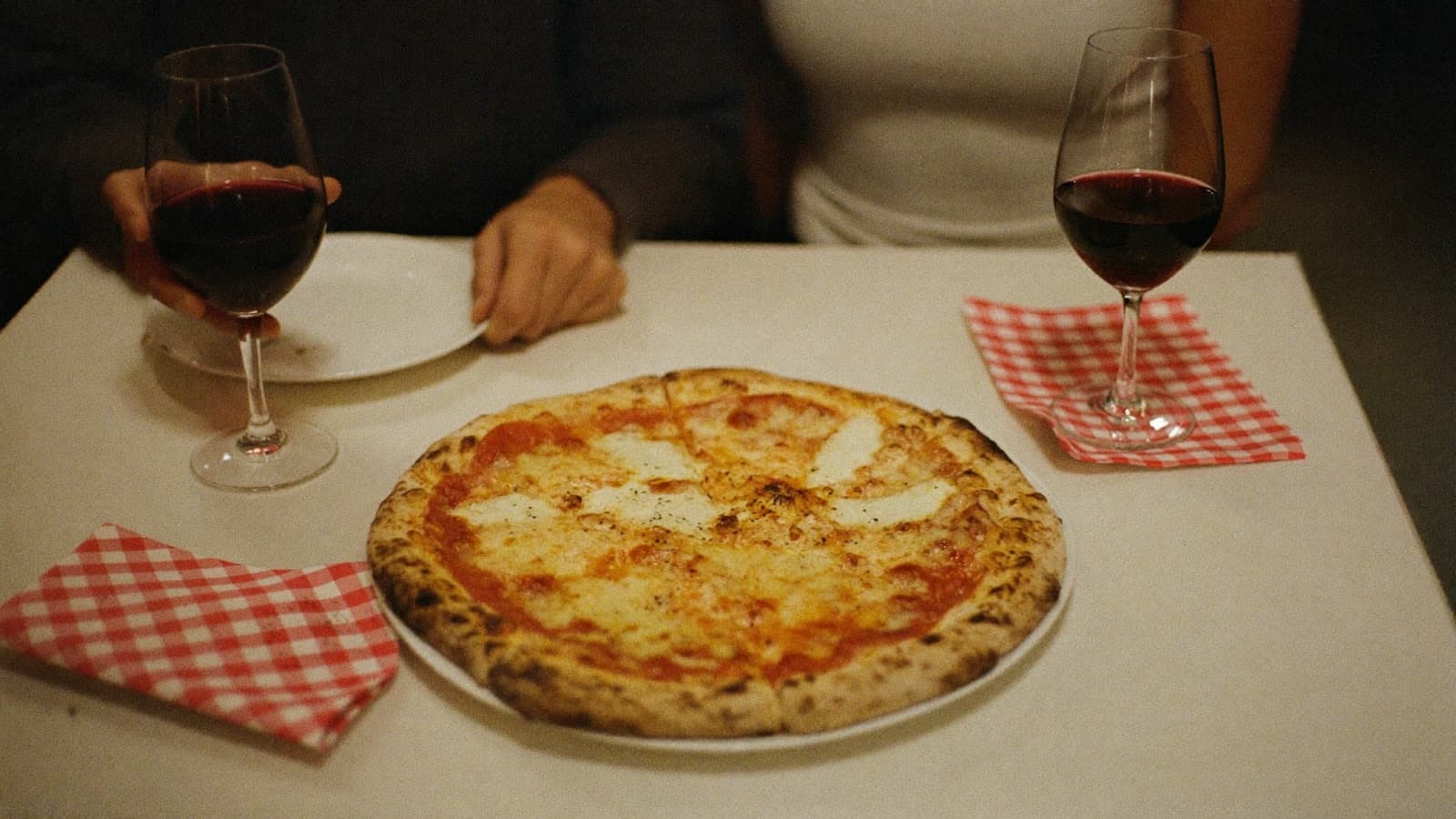
The correct wine for pizza is not whatever's open.
It's also not a $90 Barolo, which some food writers have actually suggested, apparently forgetting that pizza is eaten on Friday nights by people who are tired and want to be happy, not people who want to contemplate the vintage conditions of the Langhe.
Pizza is a casual meal with a very specific flavor profile: acidic tomato sauce, fatty cheese, savory toppings, often charred bread. The wine needs to be bright, somewhat acidic to match the tomato, not so tannic it fights the fat, and light enough not to turn a fun Friday into a serious occasion.
That's a short list. Let's use it.
The Universal Rule for Pizza and Wine
Match acidity with acidity. This is the core principle that explains every good pizza pairing. Tomato sauce is highly acidic. A wine with low acidity will taste flat and heavy against it — the food wins and the wine disappears unpleasantly. A wine with good acidity matches the sauce and brightens everything on the plate.
This is why Chianti has been paired with Italian food for centuries. It's not tradition for tradition's sake. Sangiovese — the grape in Chianti — has naturally high acidity and enough fruit to stand up to tomato without either element dominating.
By Style: The Specific Answers
Classic Margherita or Cheese Pizza
The pizza is doing everything right — fresh tomato, quality mozzarella, good crust. Don't complicate it.
Red: Chianti Classico ($18–$28 at a wine shop, exactly right). Alternatively, a light Barbera d'Asti ($16–$24) — brighter fruit, slightly more playful, equally appropriate.
White: If you're in a white wine mood, a Vermentino from Sardinia or coastal Tuscany is extraordinary with Margherita. The salty, herbal quality in Vermentino rhymes with the basil and the cheese.
Pepperoni or Sausage Pizza
The fat content goes up, the savory intensity goes up. You want a wine with a little more presence.
Red: A juicy Montepulciano d'Abruzzo ($14–$20) handles this perfectly — dark fruit, medium tannins, excellent with cured meat. Or Nero d'Avola from Sicily, which is darker and slightly more structured but equally happy next to pepperoni.
The move nobody makes but should: Gamay — specifically a Cru Beaujolais like Morgon or Moulin-à-Vent. The cherry fruit and savory undertones are extraordinary with spiced sausage and the wine is light enough not to tip the meal into a production.
White Pizza (No Tomato Sauce)
Now you've removed the acidity anchor of the tomato, which opens up different options.
White: This is the slot for a richer white — a lightly oaked Chardonnay, a white Burgundy if you're feeling generous with yourself, or a full-bodied Verdicchio from Marche. The cream or olive oil base wants something with body.
Red: If you're going red on white pizza, go light and don't fight it. A Pinot Noir from Oregon at the approachable end, or a light Barbera.
Vegetable Pizza (Mushroom, Roasted Pepper, Artichoke)
The wildcard category. Earthy vegetables, often bitter elements, roasted flavors.
Red: This is the moment for Grenache. A Côtes du Rhône at $15 is actually the perfect pizza wine for vegetable toppings — the sun-dried fruit character, the herbs, the medium weight. Alternatively, a Garnacha from Calatayud in Spain in the same price range.
The left-field call: Orange wine. It sounds like a provocation but it is genuinely correct — the texture and savory earthiness of an orange wine from Friuli or Slovenia is a remarkable pairing with mushroom or truffle pizza. Order it once and you will not stop.
Spicy Pizza (Spicy Sausage, Calabrian Chili, Peppers)
Heat and high-tannin wine is a bad combination — tannins amplify spice and the result is uncomfortable. Also avoid very high-alcohol wines, which do the same.
Red: Low tannin, bright fruit. Gamay again — Beaujolais-Villages or a Cru — is almost immune to being ruined by spicy food. A light, chilled Lambrusco (real Lambrusco, not the sweet stuff from the 1980s) is also extraordinary with spicy pizza and needs to be talked about more.
The temperature trick: Serve your red slightly cooler than you normally would — 58–62°F instead of 65°F. On warm, fatty pizza, the slight chill keeps the wine refreshing rather than heavy.
The 11pm Pizza
You ordered late. You have whatever's in the fridge plus a half-bottle of something. The correct answer is: whatever you have. The second most correct answer is a cold glass of sparkling water plus whatever's in the fridge.
The third most correct answer, if you have it: a Lambrusco from the Emilia-Romagna region of Italy, served cold. Slightly fizzy, dark and fruity, low alcohol, $12–$16, the most honest pizza wine that exists. If you don't have it, add it to your regular wine shopping list for next time.
The Bottle to Keep in the House for Pizza Nights
One bottle, always in rotation:
Chianti Classico, any producer in the $18–$25 range. Ruffino Riserva Ducale, Fonterutoli, Rocca delle Macìe, Barone Ricasoli. They're all good. They all work with any tomato-based pizza you make or order. They're the right weight, the right acidity, and they make Friday night feel like you made an effort without requiring you to make an effort.
Buy two. Pizza happens more than once a week.