

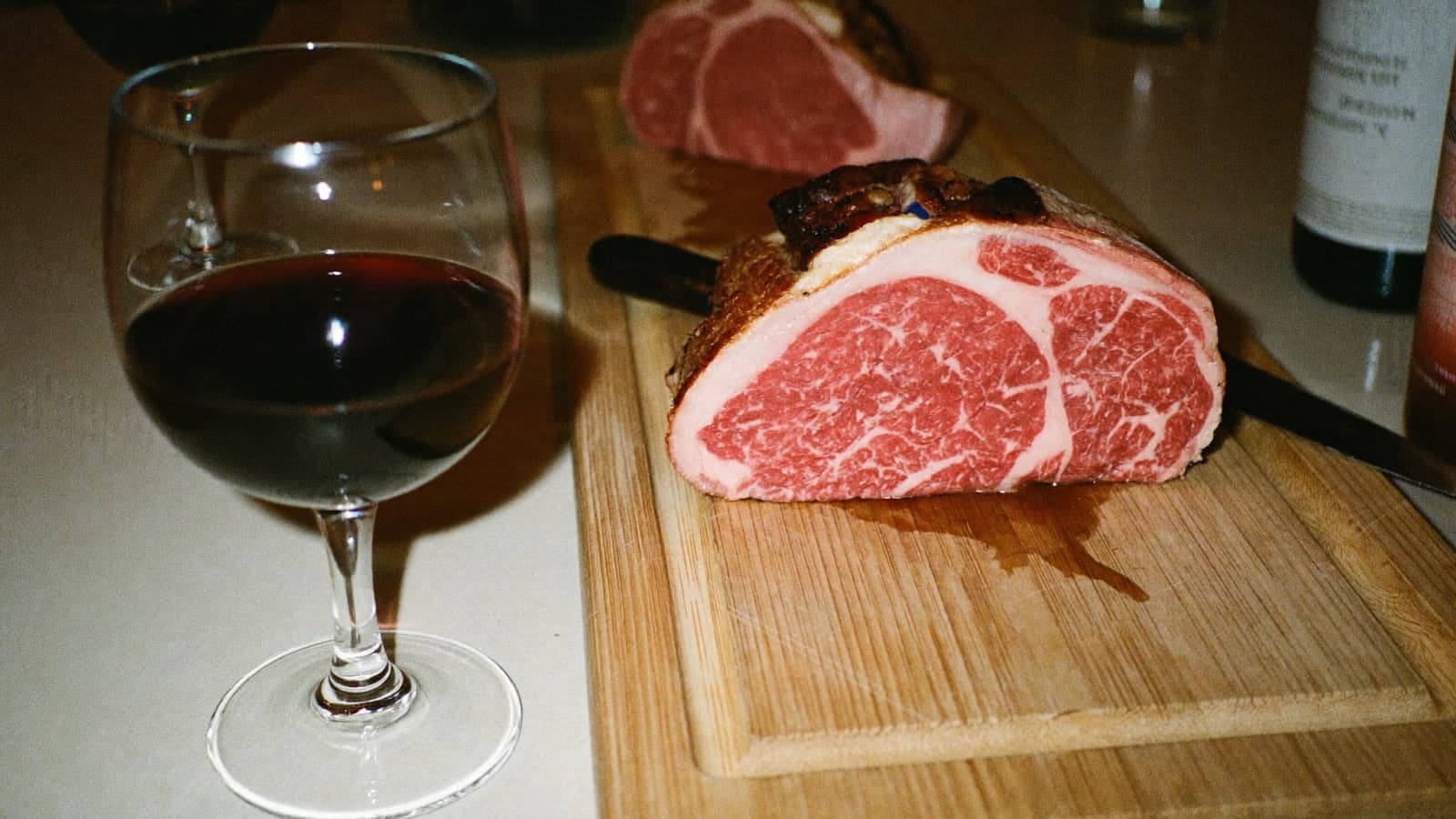
"Wine with steak" is the most-searched food and wine pairing in America, and for good reason. A great steak dinner feels incomplete without the right glass next to it. Get the pairing right and both the wine and the steak taste better. Get it wrong and you've wasted an expensive piece of meat on a wine that tastes like grape juice next to it, or vice versa.
The good news: the science behind steak and wine pairing is straightforward, and once you understand it, you'll never second-guess a steakhouse order again.
Why Red Wine and Steak Work Together
The magic comes down to chemistry. Red wines contain tannins, those compounds from grape skins and seeds that create a drying, slightly bitter sensation on your palate. Protein and fat in steak bind to tannins and soften them, making the wine taste smoother and more fruity. At the same time, the tannins cut through the richness of the meat, cleansing your palate between bites.
It's a feedback loop: the steak makes the wine taste better, and the wine makes the steak taste better. That's why this pairing has survived every food trend for centuries.
The Cut-by-Cut Guide
Not all steaks are created equal, and the right wine depends on the cut's fat content, texture, and preparation.
Ribeye
The most marbled, richest cut on the menu. All that intramuscular fat demands a wine with serious structure.
Best match: Cabernet Sauvignon (Napa Valley, Paso Robles, or Bordeaux). The king of reds for the king of cuts. Cabernet's firm tannins, dark fruit, and oak-driven structure stand up to the ribeye's richness without flinching.
Also great: Malbec from Mendoza, Argentina. Malbec delivers the tannin grip of Cabernet with rounder, plusher fruit at a lower price point. A $15 Malbec with a ribeye is one of the best value pairings in the wine world.
Sleeper pick: Barolo or Barbaresco. If you want to impress someone, these Nebbiolo-based Italian wines have high tannin, high acid, and a complexity that makes a great ribeye feel like an event.
Filet Mignon
The tenderest cut but also the leanest. Less fat means less tannin-softening power, so massive reds can overwhelm filet's delicate flavor.
Best match: Pinot Noir (Burgundy, Oregon, or New Zealand). Pinot's lighter body, silky texture, and red fruit character complement filet's tenderness without bulldozing it. This is the pairing that proves you don't always need the biggest wine.
Also great: Merlot (Washington State or Right Bank Bordeaux). Soft tannins and plummy fruit that mirror filet's gentle richness.
Sleeper pick: Barbera d'Alba. Italian, high acid, medium tannin, cherry-driven. Bright enough to pair with filet, structured enough to feel like a red wine dinner.
New York Strip
A great balance of marbling and beefy flavor. More assertive than filet, less fatty than ribeye. You've got flexibility here.
Best match: Syrah/Shiraz. The peppery, smoky, dark-fruit character of Syrah is tailor-made for a chargrilled strip. Northern Rhône Syrah (Crozes-Hermitage, Saint-Joseph) brings elegance. Australian Shiraz (Barossa Valley) brings power.
Also great: Zinfandel from Sonoma or Lodi. Zin's jammy fruit, spice, and warmth complement the strip's beefy savoriness.
Sleeper pick: Tempranillo (Rioja Reserva). Spanish Rioja has the leather, tobacco, and earthy notes that pair with grilled meat like they were built for each other. Because they were.
T-Bone / Porterhouse
Two steaks in one: strip on one side, filet on the other. You need a wine that works for both.
Best match: Cabernet Sauvignon. The universal steak wine works for both sides of the bone. Medium tannin, structured but not overpowering.
Also great: Bordeaux blend. The mix of Cabernet, Merlot, and sometimes Cabernet Franc covers the full range of textures in a T-bone.
Flank / Skirt Steak
Leaner, chewier, often served with bold marinades or chimichurri. These cuts are flavorful but need a wine that matches the preparation, not just the meat.
Best match: Malbec. The go-to pairing for South American preparations, chimichurri-style skirt steak with Malbec is one of the great food experiences.
Also great: Côtes du Rhône or Grenache blend. Fruity, medium-bodied, and versatile enough for marinated cuts.
How Sauces Change Everything
The sauce on your steak can shift the entire pairing equation. Here's a cheat sheet:
| Sauce | Wine Adjustment |
|---|---|
| Peppercorn | Lean toward Syrah (pepper meets pepper) |
| Blue cheese | Try Zinfandel or late-harvest Zin (sweet fruit + strong cheese) |
| Chimichurri | Malbec is the obvious choice (herbal meets herbal) |
| Red wine reduction | Match the wine in the sauce or go Cabernet |
| Béarnaise | Chardonnay or Burgundy (butter + butter) |
| Mushroom | Pinot Noir or Nebbiolo (earth meets earth) |
| BBQ / Sweet glaze | Zinfandel or Grenache (fruit handles sweetness) |
| Plain, salt & pepper | Dealer's choice. Any classic red pairing works. |
Can You Drink White Wine with Steak?
Yes. Next question.
Okay, a bit more context. It's not the default pairing, but there are white wines that legitimately work with steak:
Oaked Chardonnay (especially a rich Burgundy or barrel-fermented California Chard) has enough weight and texture to hold its own with a lighter cut like filet.
Viognier brings stone fruit richness and a full body that doesn't get lost next to meat.
Champagne or Blanc de Noirs sparkling wine. The combination of bubbles, acidity, and toasty complexity with a charred steak is surprisingly wonderful. Many sommeliers consider this an insider move.
The point is: if you prefer white wine and you're having steak, don't let anyone tell you it's wrong. Pair what you enjoy. But if you want the scientifically optimal pairing, red wines with tannin still have the edge.
The Steakhouse Quick-Reference Card
| Cut | Best Wine | Backup Wine | Budget Pick |
|---|---|---|---|
| Ribeye | Napa Cabernet | Malbec | Argentine Malbec ($12-15) |
| Filet Mignon | Oregon Pinot Noir | Merlot | Chilean Pinot ($10-14) |
| NY Strip | Northern Rhône Syrah | Zinfandel | Côtes du Rhône ($11-15) |
| T-Bone | Bordeaux blend | Cabernet Sauvignon | Chilean Cabernet ($10-14) |
| Skirt / Flank | Malbec | Garnacha | Spanish Garnacha ($8-12) |
What to Order When the Steakhouse Wine List Is Overwhelming
Steakhouse wine lists are legendarily long. Some have 500+ bottles. Here's how to navigate them:
Look for the "Sommelier's Picks" or "By the Glass" section first. These are curated selections that the wine team has already vetted.
Default to Cabernet Sauvignon from the middle price tier. If you're paralyzed, this is the safest steakhouse order in existence. It's the default for a reason: it works with everything.
Ask: "What Cab are you pouring by the glass?" This tells you what the restaurant is buying in volume, which usually means good value.
Don't overlook Malbec and Côtes du Rhône. These are the value plays on most steakhouse lists. Lower price, excellent quality, and perfectly suited for red meat.
Understanding Steakhouse Wine List Structure
Steakhouse wine lists aren't random collections. They're carefully curated by price point, region, and style. Understanding this structure helps you navigate even the most intimidating list. Most steakhouses organize their reds by region: California Cabernets at the top (both price and prestige), followed by Bordeaux blends, then value regions like Argentina and Spain at the bottom. This geography-based organization is actually a gift because once you identify your price range, you can focus on one geographic section rather than scanning the entire list.
The first page of a steakhouse wine list is almost always the most expensive. By-the-glass selections and "Sommelier's Picks" sections are usually found on pages two or three for a reason: the restaurant wants you to find them. This is your shortcut. The wines on these curated lists are chosen specifically for food compatibility and fair pricing, which means they're perfect for a steak dinner without the prestige markup.
Reading Price Tiers and Finding Value
The biggest mistake diners make at steakhouses is ordering from the middle of the price list out of fear. They think anything cheap looks bad on the bill. But steakhouse wine margins are so high that even their "value" picks are well-marked up from retail. A $60 bottle on the list costs the restaurant roughly $20 in wholesale cost. That same bottle might cost you $18 at a wine shop. You're not getting a bargain, but you're not being robbed either.
Look at the price jumps between bottles. Most steakhouses have natural tiers: wines from $40-60, then a jump to $80-120, then another jump to $150+. The jump between tiers reveals where the restaurant's markup philosophy changes. Often, the sweet spot is right at the bottom of the second tier, where you get serious quality wines at better-than-expected value. A $75 wine on a steakhouse list might be far more impressive than a $60 wine because of how the tiers are constructed.
Half Bottles and Smart Ordering Strategies
If you're dining as a couple and the main pairing doesn't excite you, ask about half bottles. Many steakhouses carry half bottles of their premium Cabernets and Bordeaux blends. Half bottles are priced at roughly 55-65% of the full bottle price, giving you better value while allowing you to enjoy wine at the highest quality tier. Half bottles also solve the problem of wanting two different wines with different courses. Order a half bottle of Pinot Noir with the filet course, then switch to a Cabernet with a final course steak or cheese. You get variety without committing to two full bottles.
For larger groups, ask your server about pairing wines with specific courses. Steakhouses with proper wine programs love when diners engage with wine seriously. The sommelier can suggest a progression that makes sense for your menu and might even recommend specific glasses by vintage or producer rather than just by varietal. This isn't pretentious; it's how restaurants serve great meals.
The perfect steak-and-wine pairing doesn't require a sommelier certification. It requires a basic understanding of which cuts need big wines (ribeye, T-bone) and which prefer finesse (filet), and the confidence to ask your server for help with the rest. Order boldly, eat well, drink better.