

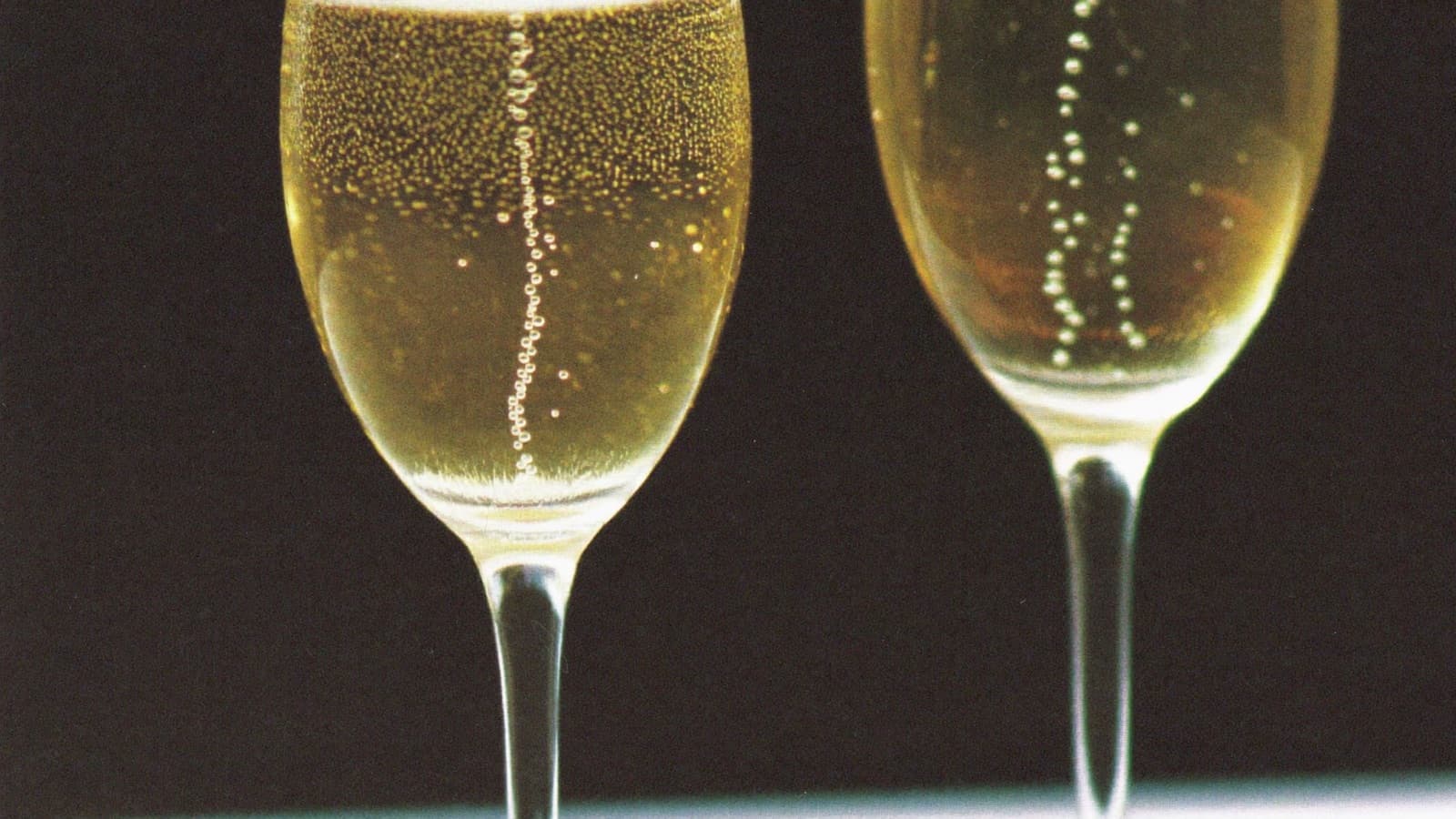
Someone at brunch orders "Champagne." The bottle arrives, and it's Prosecco. Nobody corrects it. Everybody drinks it. Life goes on.
But there IS a difference, and understanding it saves you money, improves your ordering, and gives you an edge at every celebration, brunch, and restaurant dinner for the rest of your life.
The Rule: All Champagne Is Sparkling Wine, Not All Sparkling Wine Is Champagne
Champagne is sparkling wine made in the Champagne region of northeastern France using a specific method (traditional method / méthode champenoise) from specific grapes (Chardonnay, Pinot Noir, Pinot Meunier).
That's it. Geography plus method plus grapes. If any of those three elements is missing, it's not Champagne. A winery in Napa Valley could use the exact same grapes and exact same production method and it still can't call it Champagne.
Sparkling wine is any wine with bubbles. Champagne is the most famous subcategory, but the world is full of excellent sparkling wines that don't come from Champagne and don't try to be.
This distinction matters more than you think, especially when you're sitting at a restaurant table with a wine list in your hands. Knowing which styles use which production methods, what sweetness levels actually mean, and where the real value lives will save you hundreds of dollars and eliminate that awkward moment when you're not sure what to order.
The Major Sparkling Wine Styles
Champagne (France)
Method: Traditional method. Second fermentation happens inside the bottle, which creates fine, persistent bubbles and complex flavors from extended contact with spent yeast cells (lees). This is the labor-intensive approach that defines the category.
How it's made: After the initial fermentation, the winemaker blends wines from multiple vineyards and vintages (for non-vintage Champagne), adds a mixture of wine, sugar, and yeast (liqueur de tirage), then seals the bottle. Bubbles form slowly over months. The bottle sits angled with the neck pointing down. Every few days, workers (or increasingly, machines) give it a tiny twist—a process called riddling. This slides the dead yeast cells toward the cap. After 2-3 years (or much longer for prestige bottlings), the winemaker freezes the neck, pops off the cap, the yeast shoots out under pressure, and a tiny bit of wine with added sugar (the dosage) goes in to seal the flavor profile.
Flavors: Brioche, toast, green apple, lemon, almond, chalk, mineral. The best Champagnes develop honey, hazelnut, cream, and biscuit notes with age. The longer it sits on the lees, the richer and more complex it becomes.
Price range: $35-200+ for non-vintage. $50-500+ for vintage and prestige cuvées.
Why it costs what it does: Small appellation with limited production. Intense, years-long labor. Massive global demand. Brand prestige. The economics of scarcity, tradition, and desire. You're not just buying bubbles; you're buying centuries of reputation.
Prosecco (Italy)
Method: Charmat/tank method (also called Cuve Close). Second fermentation happens in large pressurized tanks rather than individual bottles. This is faster and cheaper, producing lighter, fruitier bubbles that don't last as long in your glass but burst with fresh fruit flavor.
How it's made: The base wine goes into a sealed tank with yeast and sugar. Bubbles form. When the winemaker decides they have enough carbonation, they chill the tank, filter out the yeast, and bottle under pressure. The whole process takes weeks, not years. It's efficient and reliable, which is why it's become the world's most popular sparkling wine by volume.
Flavors: Green apple, pear, white peach, honeysuckle, floral notes. Softer, larger bubbles than Champagne. Fresh and fruit-forward rather than toasty and complex. Prosecco tastes like spring in a glass.
Price range: $10-20 for most. Prosecco Superiore DOCG (from Valdobbiadene/Conegliano, the heart of the region) runs $14-25 and is noticeably better.
Best for: Aperitifs, mimosas, Bellinis, casual celebrations, brunch, weeknight occasions. Prosecco is the sparkling wine of everyday pleasure. It's what you drink when you want bubbles without the commitment or the price tag.
Cava (Spain)
Method: Traditional method, same as Champagne. Second fermentation in bottle with extended lees contact, which gives it serious complexity for the price.
How it's made: Made the exact same way as Champagne but in Spain (primarily Catalonia). The climate is slightly different, the base wines are slightly different, but the commitment to quality production is identical. You get Champagne-method results with a Spanish accent.
Flavors: Citrus, almond, toast, green apple, orchard fruits. More austere and mineral than Prosecco, more approachable than Champagne. It's the Goldilocks of sparkling wine—structured enough to be serious, but not so serious it doesn't know how to have fun.
Price range: $8-18 for most. Reserva and Gran Reserva (aged longer) run $12-25.
Best for: Anyone who wants Champagne-method quality without Champagne prices. Cava is the value play of the sparkling world. If you're ordering at a restaurant and the Champagne selection looks overpriced, look for Cava—you'll often find better wine at half the cost.
Crémant (France)
Method: Traditional method. Made outside of Champagne in regions like Alsace, Burgundy, Loire, and Jura using the same rigorous standards as Champagne.
How it's made: Produced using the traditional method with extended aging on the lees, but from regions without Champagne's prestige markup. The rules are strict—minimum aging, specific grape varieties per region—which is why Crémant is the insider's choice.
Flavors: Varies by region but generally offers the toasty complexity of traditional-method sparkling at 40-60% of Champagne's price. Crémant d'Alsace tends toward citrus, flowers, and minerality. Crémant de Bourgogne leans toward apple, brioche, and hazelnut. Crémant de Loire is lighter and more delicate.
Price range: $12-22.
Best for: The insider's sparkling wine. When sommeliers drink bubbles at home, many of them reach for Crémant. It delivers serious quality at a serious discount. If you're looking to impress wine-knowledgeable friends, this is your secret weapon.
The Production Method Comparison
The method used to create bubbles is the most important factor in determining flavor profile, complexity, and price. Here's how they stack up:
| Feature | Traditional Method | Charmat/Tank Method |
|---|---|---|
| Used by | Champagne, Cava, Crémant | Prosecco, Lambrusco |
| Fermentation location | Individual bottle | Large pressurized tank |
| Time to produce | 2-10+ years | 4-8 weeks |
| Bubble character | Fine, persistent, small | Softer, larger |
| Complexity | Higher (lees aging adds layers) | Lower (fresher, fruit-forward) |
| Cost | Higher (labor-intensive, extended aging) | Lower (faster, fewer resources) |
| Aging potential | Years to decades | Drink young (within 1-2 years) |
The traditional method is more expensive and time-consuming, but the results are more complex, more elegant, and age-worthy. The tank method is efficient and produces bright, fruity wine that's meant to be enjoyed fresh. Neither is "better"—they're just different, and they serve different purposes in your glass and your cellar.
Decoding Sweetness Levels
One of the most confusing aspects of sparkling wine is the sweetness designations printed on the label. These terms tell you how much sugar was added after the second fermentation (the "dosage"). Here's what they mean:
| Label Term | Sugar (g/L) | What It Means |
|---|---|---|
| Brut Nature / Zero Dosage | 0-3 | Bone dry. No sugar added. Mineral, lean, austere. |
| Extra Brut | 0-6 | Very dry. Minimal sugar. Still quite crisp. |
| Brut | 0-12 | Dry. The most common style. Fresh fruit, balanced. |
| Extra Dry / Extra Sec | 12-17 | Slightly sweet. (Confusingly named—it's sweeter than Brut.) |
| Dry / Sec | 17-32 | Noticeably sweet. Fruit forward, dessert-friendly. |
| Demi-Sec | 32-50 | Sweet. Pairs beautifully with desserts. |
| Doux | 50+ | Very sweet. Rare. Reserved for special occasions. |
The counterintuitive naming convention catches everyone: "Extra Dry" is actually sweeter than "Brut." This is a historical artifact that refuses to die. Most Prosecco is labeled Extra Dry, which means it has a perceptible touch of sweetness. If you want dry Prosecco, look for "Brut" on the label.
At a restaurant, you can use this knowledge to your advantage. If the wine list mentions sweetness level in the notes, you know exactly what you're getting. If it doesn't, ask your server or sommelier. Sweetness is a preference, not a quality indicator—but it dramatically affects how the wine tastes with food and how happy you'll be drinking it.
How to Order Sparkling Wine at a Restaurant
Restaurant wine lists can be overwhelming, especially when sparkling wine options range from $25 to $250. Here's how to navigate like someone who knows what they're doing:
Ask about production method. If the list doesn't say whether something is traditional or tank method, ask. This tells you what to expect flavor-wise and helps justify the price.
Check the sweetness level. Ask specifically about Brut vs. Extra Dry vs. Demi-Sec. This prevents the unpleasant surprise of thinking you ordered dry wine and getting something that tastes like dessert.
Compare by style, not just price. A $28 Cava made with the traditional method might be better for your meal than a $35 non-vintage Champagne made by a house with high brand costs.
Look for restaurant-friendly producers. Restaurants often buy smarter sparkling wines than they do still wines. You might find excellent Crémant or Spanish sparkling wine at better prices than in retail stores.
Ask about by-the-glass options. If the bottle prices seem steep, check what's available by the glass. Quality sparkling wine by the glass is often a better value than a full bottle you don't want to commit to.
Don't assume more expensive = better for your meal. A $40 Champagne from a prestigious house might be less food-friendly than a $20 Cava with better acidity. Consider what you're eating.
Price vs. Quality: Where to Get the Best Value
The sparkling wine market has some of the most extreme price ranges in wine. A $10 Cava and a $300 Champagne are both sparkling wine, but your experience will be wildly different. Here's how to navigate the price tiers:
Under $15: Cava is the clear winner for quality. Traditional-method sparkling wine with aging, complexity, and Champagne-like character at 20% of the price. Look for Segura Viudas Brut Reserva, Raventos i Blanc, or any Spanish producer with "Reserva" on the label. These are often available at restaurants for $20-30 and will impress without breaking the bank.
$15-25: Crémant dominates this range with extraordinary value. Crémant d'Alsace and Crémant de Bourgogne offer some of the best price-to-quality ratios in all of wine. You're drinking traditional-method sparkling wine made under strict regulations, and you're not paying for a famous name. This is where savvy wine drinkers shop.
$25-40: The entry point for real Champagne (non-vintage). Houses like Nicolas Feuillatte, Billecart-Salmon, Charles Heidsieck, and Deutz offer legitimate Champagne quality at the bottom of the Champagne price ladder. If you want Champagne specifically, this is where to start.
$40-80: Non-vintage Champagne from houses with strong reputations (Veuve Clicquot, Moët & Chandon, Taittinger, Pol Roger). This is where most Champagne purchases land in restaurants. You're paying for prestige, but you're also drinking solid, consistent wine.
$80+: Vintage Champagne, prestige cuvées (Dom Pérignon, Krug, Cristal), and rare bottles. Exceptional wine, absolutely, but the law of diminishing returns kicks in hard. You're often paying more for the label than for additional quality.
Pro tip: When ordering at a restaurant, look at what's available just below your budget. A $35 Cava or Crémant will often outperform a $50 Champagne from a house that relies on brand recognition rather than quality.
Sparkling Wine and Food Pairing
Sparkling wine is the most versatile food wine that most people never order with food. Most people treat it as an aperitif—something to sip before the meal—but it's actually brilliant alongside almost everything.
The pairing secret: Bubbles and acidity act as a palate cleanser between bites, which means sparkling wine works with an absurdly wide range of dishes. The carbonation cuts through richness, the acidity refreshes, and the wine doesn't compete with the food.
With fried foods: Champagne and fried chicken is one of the great pairings. The acidity and bubbles cut through grease like nothing else. Same applies to fish and chips, tempura, fried shrimp, and french fries. Cava works beautifully here too, and costs significantly less.
With seafood: Oysters and Champagne is a classic for a reason. Blanc de Blancs (100% Chardonnay, no Pinot Noir) with raw shellfish is transcendent. Try it with ceviche, shrimp pasta, or scallops.
With eggs: Brunch exists because someone put Champagne next to eggs Benedict and everything made sense. Eggs are fatty, rich, and slightly runny—sparkling wine is the perfect antidote. Add toast, bacon, and hollandaise, and you have one of the best meal-wine combinations in existence.
With salty snacks: Champagne with potato chips, popcorn, almonds, or charcuterie is instant happiness. The salt amplifies the wine's fruit, and the bubbles refresh your palate between bites. This is appetizer wine at its finest.
With spicy food: The slight sweetness of an Extra Dry Prosecco or a Demi-Sec Champagne tames heat, while the bubbles cleanse. If you're eating Thai, Indian, or Mexican food, sparkling wine is your secret weapon.
When to splurge vs. save:
Splurge on quality Champagne for: milestone celebrations (engagements, anniversaries, promotions), tasting dinners where the wine gets real attention, gifts for wine lovers, and New Year's Eve (it's once a year, and the occasion matters).
Save with Cava or Crémant for: brunch, weeknight dinners with friends, cooking (never cook with expensive sparkling wine), parties where volume matters, and casual celebrations where the focus is on people, not prestige.
The best sparkling wine for any occasion is the one that fits your budget and your mood. A $10 Cava opened with friends around a table is infinitely better than a $200 Champagne saved in the fridge for an occasion that never comes. Pop the bottle. Life is the occasion.
Quick Reference Guide
When you're standing in front of a wine list or store shelf, use this to make fast, confident decisions:
Want dry, toasty complexity? Look for Champagne, Cava, or Crémant made with the traditional method.
Want fresh, fruity, affordable bubbles? Reach for Prosecco made with the tank method.
Want something in between—quality and value? Choose Cava or Crémant. You'll get traditional-method sophistication at a price that makes sense.
Want to impress people who know wine? Order Crémant. They'll immediately know you understand value.
Want the prestige factor? Champagne is the answer, and now you know which price tier offers the best bang for your buck.
Remember: You're not just buying wine; you're buying the story behind it. Champagne's story is centuries of prestige and tradition. Cava's story is Spanish craftsmanship at an honest price. Crémant's story is French quality without the markup. Prosecco's story is Italian joy and everyday celebration. Pick the story that matches your moment, and you can't go wrong.
Also, if you're ordering wine for a meal, don't forget to consider the other fundamentals. Make sure you're reading the wine label correctly to understand what you're buying, and if you're new to restaurant dining, check out our guide on how to order wine to feel confident. And if you're watching calories in wine, sparkling wines are generally comparable to still wines, though it's worth checking specific bottles if you're tracking closely.