

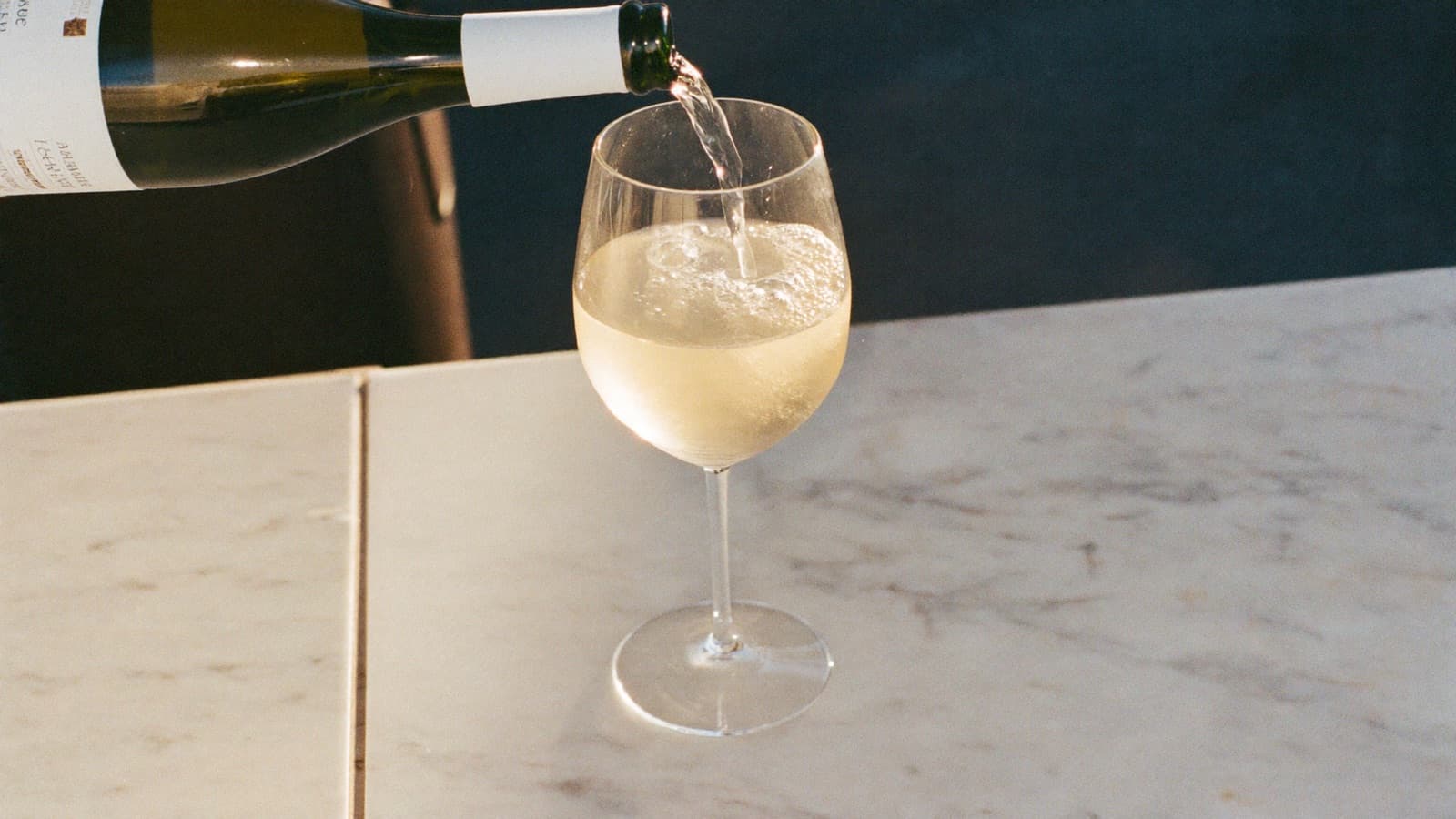
If you've ever Googled "calories in wine" while holding a glass of wine, you're in good company. This is one of the top five most-searched wine questions every single year.
The answer isn't as complicated as the internet makes it. A standard 5-ounce glass of wine runs between 110 and 175 calories for most table wines, with a few outliers above and below that range.
But if you want the full picture, including which wines are lightest, why alcohol is the real calorie driver, and how to make smarter choices at restaurants, here's everything you need.
The Quick Answer
A standard 5-ounce glass of wine contains roughly:
| Wine Type | Calories (5 oz) | ABV Range |
|---|---|---|
| Sparkling Brut | 90–110 | 11–12.5% |
| Vinho Verde | 85–100 | 9–11% |
| Pinot Grigio | 110–125 | 11.5–13% |
| Sauvignon Blanc | 115–125 | 12–13.5% |
| Dry Rosé | 110–130 | 11.5–13.5% |
| Chardonnay | 120–140 | 13–14.5% |
| Pinot Noir | 120–135 | 12.5–14% |
| Merlot | 125–140 | 13–14.5% |
| Cabernet Sauvignon | 130–150 | 13.5–15% |
| Zinfandel | 135–155 | 14–15.5% |
| Syrah/Shiraz | 135–150 | 13.5–15.5% |
| Moscato | 130–160 | 5.5–9% |
| Port / Dessert Wine | 170–235 | 15–22% |
Those numbers assume a standard 5-ounce pour. Restaurant pours vary. Some places pour 6 ounces. A few generous spots pour 8. Your home pours are probably bigger than you think too (check our guide on how many glasses are in a bottle for the real math), but we'll get to that.
Why Alcohol Is the Number One Calorie Driver
Here's the fact that most calorie articles bury: alcohol itself has 7 calories per gram. That puts it between carbohydrates (4 cal/g) and fat (9 cal/g). This means the higher the alcohol content of your wine, the higher the calorie count, even if the wine has zero residual sugar.
A 12% ABV Pinot Grigio and a 15% ABV Zinfandel are not in the same calorie ballpark, even though they're both "wine." The Zinfandel can have 25-30% more calories per glass purely from the alcohol difference.
The rule of thumb: Every 1% increase in ABV adds roughly 10-14 calories per 5-ounce glass. A wine at 11% ABV will come in around 110-115 calories. Bump that to 14.5% and you're looking at 140-150.
So if you're watching calories, the ABV percentage on the bottle tells you more than anything else on the label.
Residual Sugar's Role
Sugar contains 4 calories per gram, and sweet wines can have substantial residual sugar. A dry wine has under 4 grams of sugar per liter. A sweet Moscato can have 100+ grams per liter. That difference adds up.
But here's the twist: many sweet wines are lower in alcohol. A Moscato at 5.5% ABV with 90 g/L of sugar ends up in roughly the same calorie range as a dry Cabernet at 14.5% ABV with almost no sugar. The calories come from different sources, but the total is surprisingly similar.
The real calorie bombs are dessert wines that are both high in sugar AND high in alcohol. Port (around 20% ABV with significant sugar) can hit 230+ calories in a standard serving.
The Lowest-Calorie Wine Options
If you're looking to drink lighter without switching to water, these are your best bets:
Brut sparkling wine (Champagne, Cava, Prosecco Brut) sits at the bottom of the calorie chart. Low sugar, moderate alcohol, and smaller pour sizes add up to the lightest wine option available. A 5-ounce glass of Brut Cava: about 90-100 calories.
Vinho Verde from Portugal is naturally low in alcohol (9-11% ABV) and bone dry, which puts it in the 85-100 calorie range. It's also delicious, slightly effervescent, and ridiculously affordable.
Pinot Grigio from northern Italy tends to be 11.5-12.5% ABV, keeping it at the lower end of white wine calories. Clean, refreshing, and diet-friendly.
Dry Riesling with moderate alcohol (11-12% ABV) offers big flavor for relatively few calories. German Trocken Rieslings are a great pick.
Muscadet is a dry, lean white from the Loire Valley at around 12% ABV. Light, mineral, and low-calorie without tasting like it's trying to be healthy.
What About Wine at Restaurants?
Restaurant pours are where calorie estimates go sideways. Here's why:
Standard restaurant pour is 5 ounces, but many restaurants now offer 6-ounce pours and some generous by-the-glass programs pour up to 8 ounces. An 8-ounce pour of Cabernet Sauvignon is closer to 240 calories than the 150 you'd see in a standard calorie chart.
Ask about pour sizes. It's not a weird question. Knowing whether you're getting 5 or 6 ounces helps you plan your evening, whether you're counting calories or just trying to pace yourself.
By-the-glass wines tend to be higher ABV. Restaurants often feature fuller-bodied wines by the glass because they taste impressive as a standalone pour. This means glass pours skew toward higher-calorie options.
If you're splitting a bottle, a standard 750ml bottle contains about 25 ounces. Split between two people, that's 12.5 ounces each, or about 2.5 standard glasses. At 130 calories per glass, that's roughly 325 calories per person for the whole bottle.
Wine vs. Other Drinks
For context, here's how wine stacks up against common alternatives:
| Drink | Calories | Serving Size |
|---|---|---|
| Light beer | 100–110 | 12 oz |
| Regular beer | 140–180 | 12 oz |
| IPA | 180–250 | 12 oz |
| Glass of wine (dry) | 110–150 | 5 oz |
| Margarita | 250–350 | 8 oz |
| Vodka soda | 95–100 | 1.5 oz vodka |
| Old Fashioned | 180–220 | 3 oz |
| Hard seltzer | 95–110 | 12 oz |
Wine lands in the middle of the pack. Lower than cocktails and craft beer, higher than light beer and hard seltzer. Not the lowest option, not the highest. Just... reasonable.
Tips for Drinking Lighter at Restaurants
Check the ABV before ordering. Most wine lists show the alcohol percentage, and if they don't, the bottle label will. Choosing a 12% wine over a 15% wine saves you roughly 30-40 calories per glass.
Sparkling wine as an aperitif. Starting with a glass of Brut Cava or Prosecco while you look at the menu is low-calorie, festive, and gives you time to decide on a bottle.
Choose European wines over New World for lower ABV. French, Italian, and German wines tend to run lower in alcohol than comparable wines from California, Australia, or Argentina. A French Côtes du Rhône at 13.5% vs. an Australian Shiraz at 15% makes a noticeable calorie difference over a few glasses.
Order a half bottle. Many restaurants offer half bottles (375ml, about 2.5 glasses). It's a portion control strategy disguised as a wine selection.
Alternate with water. Not revolutionary advice, but it works. A glass of water between glasses of wine keeps you hydrated and naturally slows your consumption.
What to Order at a Restaurant If You're Counting
Restaurant wine lists give you everything you need to make calorie-conscious decisions if you know where to look. Start with ABV. Most lists print it next to each wine, and if they don't, the bottle certainly will. Scanning the list for wines at 12-13% ABV instead of 14-15% saves you 30-40 calories per glass without changing anything else about your evening.
Sparkling wine as an aperitif is the lightest way to start dinner. A glass of Brut Cava or Prosecco while you look at the menu comes in under 100 calories and sets a festive tone. It also buys you time to decide on a bottle without feeling rushed, which often leads to a more deliberate choice for your main wine.
European wines tend to run lower in alcohol than their New World counterparts. A French Côtes du Rhône at 13.5% ABV versus an Australian Shiraz at 15% makes a meaningful calorie difference over two or three glasses. If the list separates wines by region, gravitate toward the French, Italian, and Spanish sections for naturally lower-ABV options.
Finally, consider ordering a half bottle if you're dining as a pair. At 375ml (about 2.5 glasses), a half bottle gives both of you a glass plus a small top-up. It's a built-in portion control strategy that happens to look like a sophisticated wine choice. Many restaurants carry half bottles of their best sellers, and sommeliers love recommending them for multi-course meals.
The Bottom Line
Wine calories are real but manageable. A glass or two of wine with dinner adds 220-300 calories to your meal, which is roughly equivalent to a side of bread or a small dessert. You can manage that within almost any eating pattern without giving up the pleasure of a good glass.
The biggest lever you have is ABV. Choose lower-alcohol wines and you automatically reduce calories without changing how much you drink or what you enjoy. Sparkling wine, Vinho Verde, Pinot Grigio, and dry Riesling are your friends here.
Count if you want. Don't count if you don't want. But either way, now you know the numbers.