

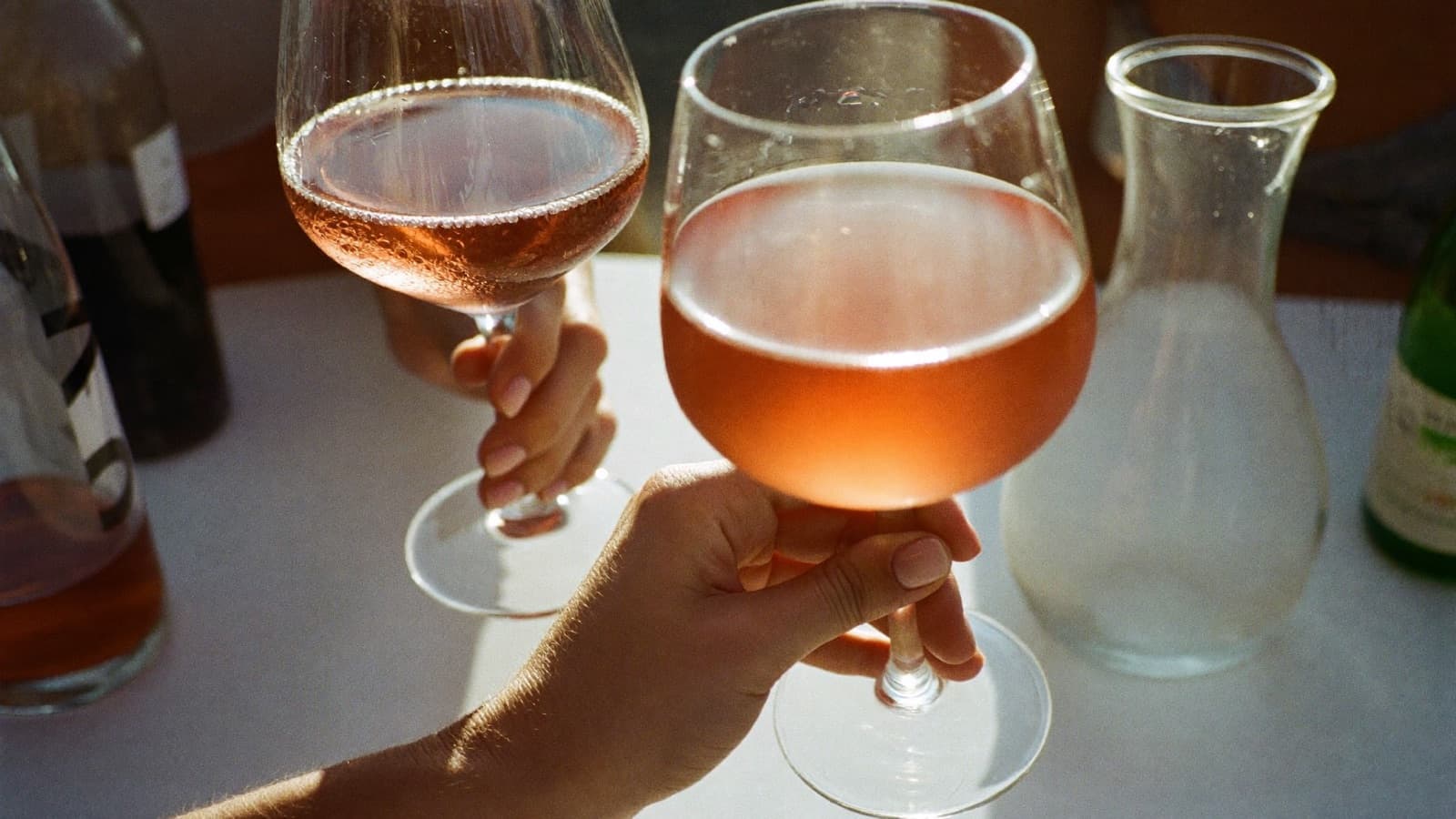
Rosé went from punchline to phenomenon in about a decade. What was once dismissed as "the pink one" is now the fastest-growing wine category in the U.S., and 55% of American wine drinkers say they enjoy it.
But most people who drink rosé couldn't explain how it's made, why some are dry and some are sweet, or why a $12 bottle from Provence can taste completely different from a $7 White Zinfandel. Time to fix that.
How Rosé Is Actually Made
Rosé is not red wine mixed with white wine. That's a persistent myth, and with very few exceptions (some Champagne rosé blends red and white base wines), it's wrong.
Rosé is made from red grapes with limited skin contact. Here's the process:
The Direct Press Method
Red grapes are harvested and pressed immediately, just like making white wine. The brief contact between juice and skins during pressing extracts a faint blush of color. This method produces the palest, most delicate rosés. Provence rosé is often made this way.
The Maceration Method
Red grapes are crushed and the juice soaks with the skins for a few hours to a couple of days. Compare that to red wine, which soaks for weeks. The brief contact extracts some color and a touch of tannin, but far less than a full red wine. The juice is then drained off and fermented like a white wine.
The shorter the skin contact, the paler the color and the lighter the wine. Longer contact produces deeper salmon and coral colors with a bit more body.
The Saignée Method
Saignée (sahn-YAY) means "bleeding." Winemakers making red wine will sometimes drain off a portion of juice early in fermentation to concentrate the remaining red wine. That drained-off juice becomes rosé as a byproduct. Saignée rosés tend to be slightly darker, more full-bodied, and more fruit-forward because the juice came from a batch destined for serious red wine.
Each method produces a different style of rosé, which is part of why the category is so diverse. A direct-press Provence rosé and a saignée Syrah rosé taste almost nothing alike, despite both being pink.
Dry Rosé vs. Sweet Rosé: The Great Divide
This is where most of the confusion lives, because both styles share shelf space and both are called "rosé."
Dry Rosé
Dry rosé has little to no residual sugar. It tastes crisp, refreshing, and savory. Provence-style rosé is the gold standard: pale pink, bone dry, with watermelon, strawberry, and herbal notes. If you enjoy dry white wines like Sauvignon Blanc, you'll likely love dry rosé.
Dry rosé is the style that gets paired with serious food and doesn't need summer to justify itself. It's the rosé you'll find on well-curated restaurant wine lists.
Sweet Rosé
Sweet rosé (White Zinfandel, some blush wines) retains noticeable sugar. It tastes candied, fruity, and easy-drinking. White Zinfandel was the best-selling wine in America for much of the 1990s, and it's still popular today.
Both are legitimate wines. But they're as different from each other as a dry Champagne is from a sweet Moscato. If you tried one style and didn't like it, the other might win you over.
How to Tell Them Apart
Dry rosés from Provence, Navarra (Spain), and the Willamette Valley are almost always dry. If the label says "White Zinfandel," "Blush," or comes from a mass-market brand with a cutesy name, it's probably sweet.
ABV is a reliable clue: dry rosés typically run 12-13.5% ABV, while sweet rosés are often lower (9-11%). Higher alcohol usually means the yeast consumed more sugar during fermentation, leaving less sweetness behind.
The Major Rosé Styles by Region
Provence (France)
Pale salmon pink. Bone dry. Watermelon, peach, garrigue herbs. This is the style everyone is trying to emulate, and for good reason. Light-bodied, mineral, and effortlessly elegant. Best chilled to 45-50°F. Labels to look for: Château Miraval, Whispering Angel, Domaines Ott.
Tavel (France)
The darkest, boldest rosé you'll find. Deeper color, more body, more tannin structure than Provence. This is almost a light red wine and one of the few rosés that can genuinely stand up to hearty food like grilled lamb or cassoulet. Tavel is 100% rosé-only; unlike other regions, they don't make red wine here.
Navarra (Spain)
Made primarily from Garnacha (Grenache). Dry, fruity, strawberry-forward, and priced aggressively. Some of the best value rosé in the world lives here. If you're spending $8-13 on a bottle of rosé and want it dry and reliable, Navarra is your region.
Willamette Valley (Oregon)
Pinot Noir rosé. Delicate, crisp, with red berry and citrus notes. A domestic alternative to Provence at similar quality. Oregon winemakers take their rosé seriously, and it shows.
Bandol (France)
Rich, complex, and age-worthy. Made predominantly from Mourvèdre, which gives it more structure and depth than most rosés. Top Bandol rosés (like Domaine Tempier) can age 5-10 years and develop remarkable complexity. This is rosé for people who think rosé is simple.
White Zinfandel (California)
Sweet, coral-pink, low alcohol. Strawberry candy and watermelon. Not pretending to be Provence, and there's nothing wrong with that. It's the gateway wine that brought millions of Americans to wine in the first place.
The Style Comparison
| Style | Color | Sweetness | Body | ABV | Price Range |
|---|---|---|---|---|---|
| Provence | Pale salmon | Bone dry | Light | 12-13% | $12-22 |
| Tavel | Deep salmon | Dry | Medium | 13-14% | $14-20 |
| Navarra | Light pink | Dry | Light-medium | 12-13.5% | $7-13 |
| Bandol | Copper-pink | Dry | Medium | 13-14.5% | $18-30 |
| Oregon Pinot Noir | Pale pink | Dry | Light | 12-13% | $14-20 |
| White Zinfandel | Coral | Sweet | Light | 9-11% | $5-10 |
Rosé and Food: Not Just for Summer
The biggest misconception about rosé is that it's seasonal. Dry rosé is one of the most versatile food wines on the calendar.
What Rosé Pairs Well With
Salads and grain bowls, grilled chicken and fish, charcuterie and cheese boards, sushi, Thai and Vietnamese food, pizza, roast turkey, Mediterranean dishes like hummus, tabbouleh, and grilled vegetables, and almost anything at brunch.
Why It Works With So Much
Rosé sits at the intersection of red and white wine characteristics. It has the acidity and freshness of white wine with a hint of the body and fruit you get from reds. That makes it a bridge wine that works where neither pure red nor pure white is quite right.
The Thanksgiving Argument
Thanksgiving dinner might be rosé's greatest stage. The table includes turkey, cranberry sauce, sweet potatoes, stuffing, and gravy. No single red or white covers all of that. A dry rosé covers everything without clashing with anything. If you're agonizing over wine and food pairing for a multi-dish meal, rosé is often the answer.
How to Order Rosé at a Restaurant
A few practical tips when you spot rosé on a restaurant list:
Check the region and the vintage. Rosé is meant to be drunk young. Last year's vintage is ideal. Two years old is fine. Three or more years and you're gambling unless it's from a producer like Tempier that's built for aging.
If the list has multiple rosés, ask your server which one is driest. Restaurants sometimes stock both dry and off-dry rosés, and the descriptions on wine lists don't always make the sweetness level clear.
Rosé by the glass is usually a solid choice. Restaurants turn through their rosé quickly because it's popular, so freshness isn't a concern. It's also a great glass-pour option when your table is split between red and white drinkers.
The Rise of Gastronomic Rosé
Something interesting has happened in the last five years: restaurants have started treating rosé as a serious food wine, not just a warm-weather pour. Top restaurants now keep dry rosé on their lists year-round, and sommeliers recommend it with main courses, not just appetizers.
This shift is driven by quality. The rosés coming from Provence, Bandol, and Tavel are complex, structured wines with real substance. They're not disposable summer sippers. They're wines that reward attention.
The sparkling rosé category has exploded too. Sparkling rosé from Champagne, Crémant producers, and even Cava houses now accounts for a growing share of by-the-glass programs at restaurants with strong wine programs.
The result: rosé is finally getting the respect it deserves. It's not a category to grow out of or feel embarrassed about ordering. It's a legitimate wine style with centuries of history, excellent food-pairing versatility, and quality that ranges from casual to world-class.
Order it in February. Order it in August. Order it whenever you want a wine that refreshes without sacrificing substance. That's what rosé does best.
If you're new to rosé, start with a Provence-style bottle in the $12-18 range. Pour it cold, pair it with whatever you're eating, and notice how it bridges the gap between white and red in a way no other wine can. Once you find a style you love, explore the regions behind it. From Tavel to Bandol to the Spanish coast, the world of rosé is deeper than most people realize, and every bottle is an invitation to go further.