

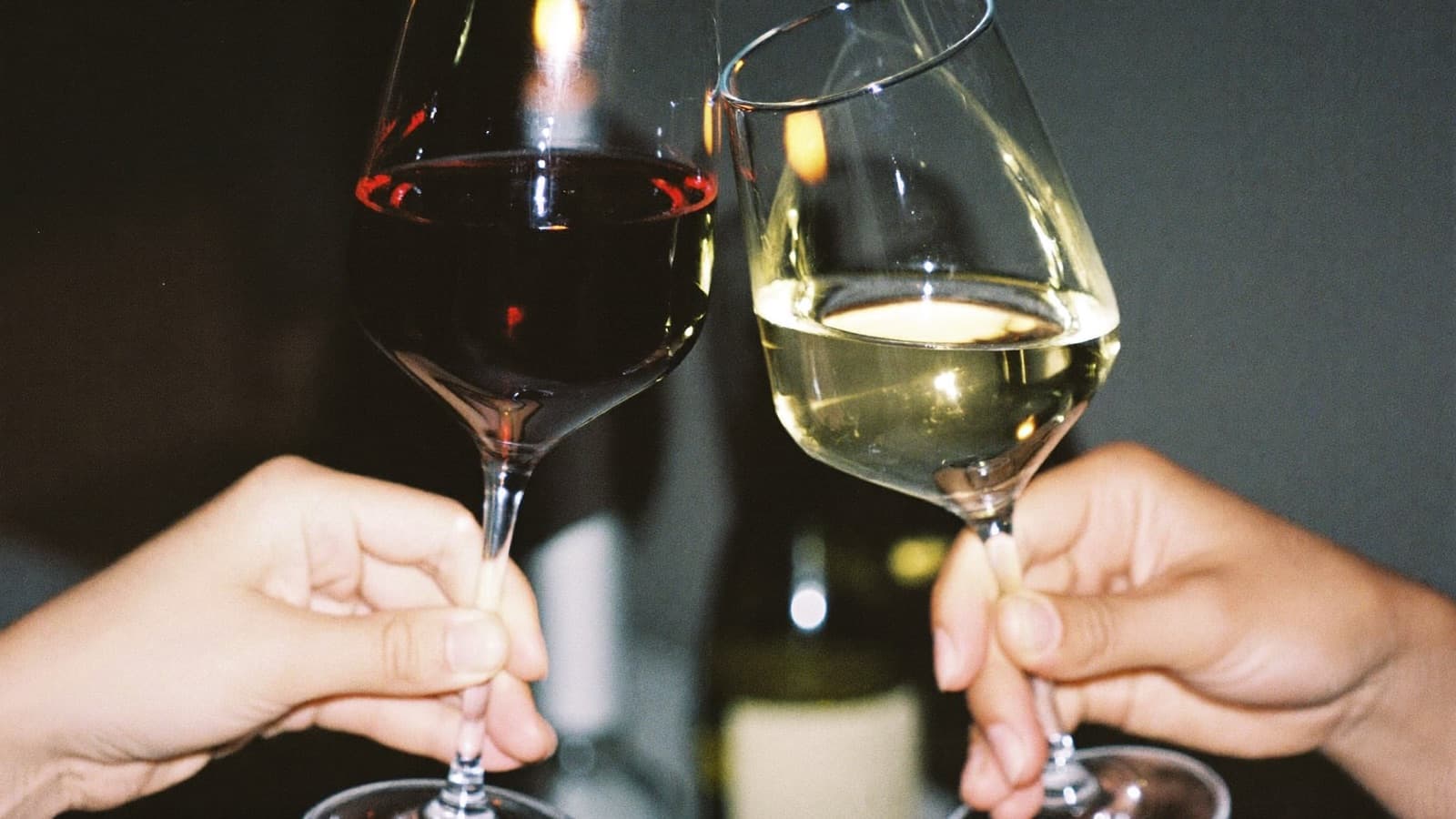
Red wine is red. White wine is white (well, yellow-green). You already knew that. But the real differences go far deeper than what's in your glass, and understanding them changes how you order, pair, and enjoy wine.
Where the Color Comes From
Grape juice is clear. Almost all of it, whether from red grapes or white grapes, starts out colorless. The color in red wine comes from skin contact during fermentation.
Red wine is made by fermenting grape juice with the grape skins, seeds, and sometimes stems left in. The skins contain pigments (anthocyanins) that leach into the juice, turning it red. The longer the skins stay in contact, the deeper the color and the more tannin the wine develops.
White wine is made by pressing the grapes and separating the juice from the skins before (or shortly after) fermentation begins. No skin contact means no color extraction, no tannin, and a lighter body.
This single difference in production—skins in or skins out—is responsible for almost everything that separates red from white.
The Flavor Differences
Red wine and white wine taste fundamentally different because skin contact changes the chemical composition of the finished wine.
Red wine flavors tend toward: dark fruit (blackberry, plum, black cherry), red fruit (raspberry, strawberry, cranberry), earth and spice (leather, tobacco, black pepper), and oak influences (vanilla, cedar, smoke) when aged in barrels.
White wine flavors tend toward: citrus (lemon, lime, grapefruit), stone fruit (peach, apricot, nectarine), tropical fruit (pineapple, mango, passionfruit), and floral or herbal notes (honeysuckle, green apple, grass).
These are generalizations with plenty of overlap. A light Pinot Noir can taste more like a rich white than a heavy red. A barrel-aged Chardonnay can feel heavier than some medium-bodied reds. But as a starting framework, it holds.
Body and Texture
Body is how the wine feels in your mouth—its weight and viscosity. Think skim milk versus whole milk versus cream.
Most red wines are medium to full-bodied because skin contact extracts compounds (tannins, phenolics) that add weight and texture. Reds tend to feel richer, denser, and more coating on the palate.
Most white wines are light to medium-bodied because the absence of skin contact keeps the wine lean. Whites tend to feel crisper, brighter, and more refreshing.
The exception: oaked Chardonnay and Viognier can be full-bodied whites that rival medium reds in weight. And some light reds (Beaujolais, Valpolicella) are lighter than many whites.
Tannin: The Defining Red Wine Characteristic
Tannins are naturally occurring compounds found in grape skins, seeds, and oak barrels. They create that drying, slightly grippy sensation in your mouth—similar to over-steeped tea or dark chocolate. Learn more about what tannin is and how it affects your wine experience.
Red wines have tannins because they're made with skin contact. Some reds have a lot of tannin (Cabernet Sauvignon, Nebbiolo, Tannat) and some have very little (Pinot Noir, Gamay, Grenache), but all reds have more tannin than whites.
White wines have virtually no tannin because the skins are removed before fermentation. This is why white wines taste "smoother" to people who are tannin-sensitive.
Tannin isn't good or bad. It's a stylistic element. If you find red wine bitter or drying, you may be tannin-sensitive. Start with low-tannin reds and work your way up.
Serving Temperature
Serving wine at the wrong temperature is the most common and most fixable wine mistake. Understanding proper wine serving temperature makes an enormous difference in how the wine tastes.
| Wine Type | Ideal Temp | Practical Translation |
|---|---|---|
| Light whites (Pinot Grigio, Sauvignon Blanc) | 45–50°F | Straight from the fridge |
| Full whites (Chardonnay, Viognier) | 50–55°F | 10 min out of the fridge |
| Rosé | 45–55°F | Chilled |
| Sparkling | 40–45°F | Very cold |
| Light reds (Pinot Noir, Gamay) | 55–60°F | Slightly cool to the touch |
| Full reds (Cabernet, Syrah) | 60–65°F | Cellar temp, NOT room temp |
The most common mistake is serving reds too warm. "Room temperature" was coined when rooms were 60°F in drafty European estates. Your 72°F living room makes red wine taste flabby and alcoholic. If your red wine tastes hot, give it 15 minutes in the fridge.
Quick Food Pairing Rules
The general principle: red wine pairs with richer, heavier dishes. White wine pairs with lighter, more delicate dishes. But the exceptions are where it gets fun. Master the fundamentals with our guide to wine and food pairing.
Reds work best with: red meat, lamb, game, tomato-based pastas, hard cheeses, mushroom dishes, barbecue.
Whites work best with: seafood, chicken, salads, cream-based pastas, soft cheeses, vegetable dishes, sushi.
The overlap zone: pork, salmon, and grilled chicken can go either way. These are medium-weight proteins that pair equally well with a rich white (oaked Chardonnay) or a lighter red (Pinot Noir).
The rebel pairings that work: Champagne with fried chicken. Beaujolais with Thanksgiving turkey. Riesling with spicy Thai food. These break the "rules" and taste spectacular.
The Side-by-Side Comparison
| Category | Red Wine | White Wine |
|---|---|---|
| Made with | Grape skins included | Grape skins removed |
| Color range | Ruby to deep garnet | Pale straw to golden |
| Tannin | Low to high | None to trace |
| Body | Medium to full | Light to medium |
| Typical ABV | 12.5–15.5% | 10–14% |
| Serving temp | 55–65°F | 40–55°F |
| Common flavors | Dark fruit, earth, spice | Citrus, stone fruit, herbs |
| Calories (5 oz) | 120–155 | 100–140 |
| Best with | Red meat, hearty dishes | Seafood, lighter dishes |
| Storage after opening | 3–5 days | 3–5 days (5–7 for whites with screw cap) |
What About Rosé and Orange Wine?
Rosé sits between red and white. It's made from red grapes with brief skin contact (a few hours to a couple of days), extracting some color and a touch of tannin but far less than a full red wine. The result is a pink wine with the refreshing acidity of white wine and a hint of the fruitiness you find in reds. Learn more about rosé wine and what makes it unique.
Orange wine (also called skin-contact white wine) flips the script. It's made from white grapes but fermented with extended skin contact, like a red wine. The result is an amber-hued wine with more texture, tannin, and complexity than standard white wine. Orange wine is the darling of natural wine bars and adventurous drinkers.
Rosé has exploded in popularity over the past decade, and for good reason. On a restaurant menu, it's the wine that bridges gaps between drinkers who normally split red versus white. It's crisp enough to pair with appetizers and lighter seafood courses, but it has enough body to work with richer fish preparations or roasted chicken. Many restaurants now feature rosé prominently, recognizing it as a versatile crowd-pleaser that works from spring through early fall.
Orange wine remains more niche, found primarily in natural wine-focused establishments and restaurants with adventurous wine programs. If you see it on a menu, it's a signal that the restaurant takes wine seriously and is interested in older European winemaking traditions. Natural and biodynamic producers are particularly drawn to orange wine techniques, as the extended skin contact creates complex flavors without relying on sulfite additions. It's worth trying if you're comfortable with unusual colors and more mineral, slightly funky flavor profiles.
How to Pick Between Red and White
When you're staring at a menu and can't decide, use this decision tree:
Is it a hot day? → White or rosé. Cold wines refresh in heat.
Are you eating red meat? → Red, almost always.
Are you eating seafood? → White, with exceptions for salmon and tuna.
Is the food spicy? → White (Riesling) or rosé. Tannin amplifies heat.
Are you just having drinks, no food? → Whatever you're in the mood for. There are no rules without a plate on the table.
Genuinely can't decide? → Order a glass of each. Nobody is stopping you, and it's a perfectly normal restaurant move.
The red vs. white choice isn't a commitment. It's a starting point. Most serious wine drinkers enjoy both depending on the occasion, the meal, and their mood. The point isn't to pick a side. It's to understand what each brings to the table so you can choose with purpose.
How to Navigate Red vs. White at a Restaurant
At the restaurant table, the red-versus-white decision becomes social and practical. If you're dining alone or with someone who shares your preference, great—you've got your answer. But in a mixed group where some people want red and others want white? That's when you need a strategy.
The smartest move is ordering by the glass. This lets each person get what they want, and there's no awkwardness about committing to a bottle that only half the table will enjoy. Most restaurants' wine-by-the-glass programs are thoughtfully curated precisely for this reason—the list recognizes that diners have different preferences and different dishes.
If you're ordering a bottle to share, ask your server for a recommendation that works across the table. A good server will ask what people are eating and suggest either a medium-bodied red that doesn't overpower lighter dishes (like a Pinot Noir) or a fuller white that can stand up to richer foods (like an oaked Chardonnay). The overlap zone wines—Pinot Noir, lighter Syrah, richer Sauvignon Blancs, and oaked Chardonnay—exist precisely for these moments.
Don't let the table's divided preferences paralyze you. Some of the best meals happen when everyone orders what they actually want, wines don't match perfectly, and nobody cares because the food and company are great. Wine is meant to enhance the experience, not become the experience.