

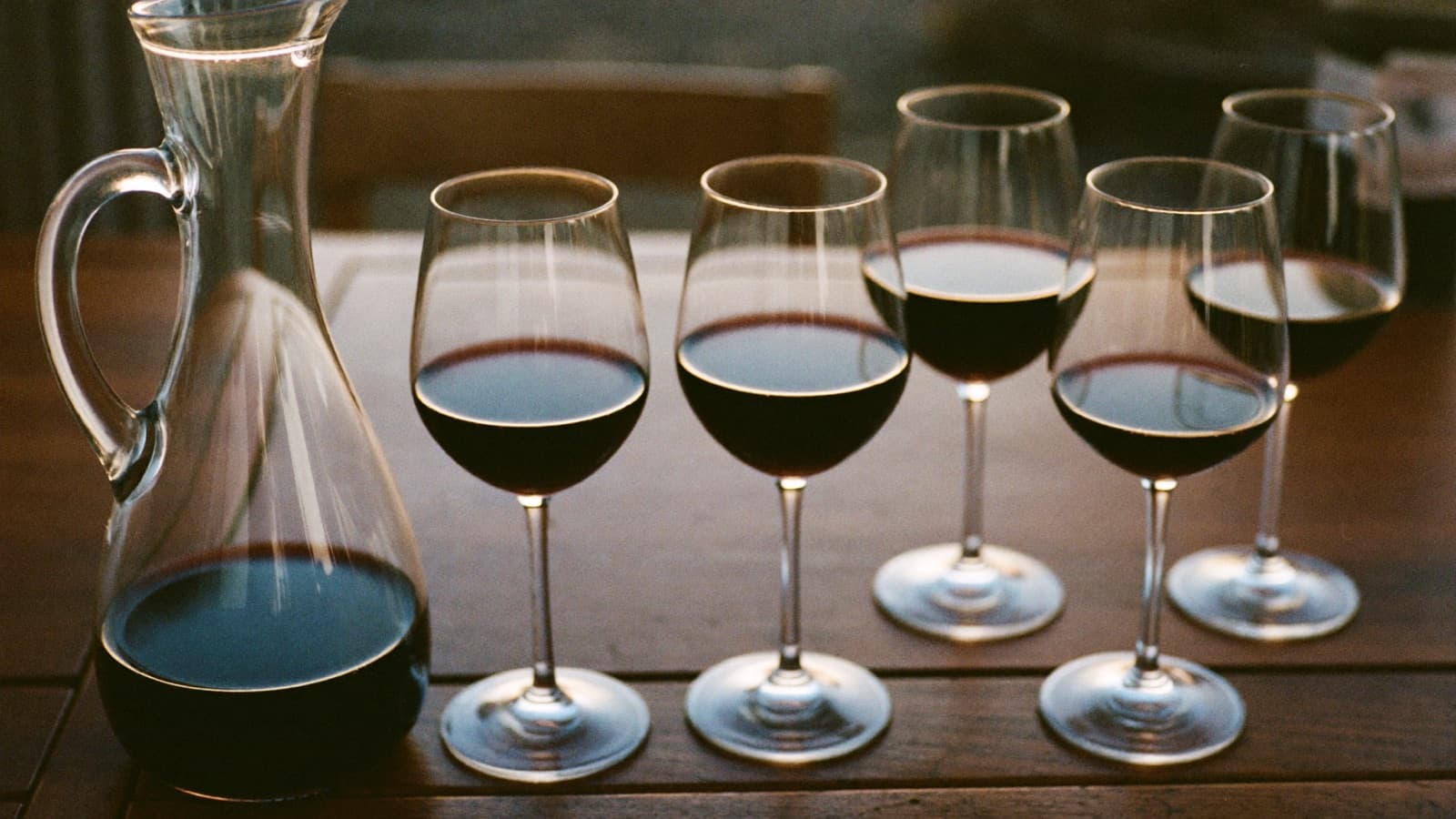
"How many glasses in a bottle?" is one of the most Googled wine questions every year. It's also one of the most practically useful, because the answer determines whether you should order glasses or a bottle at a restaurant, how much wine you need for a dinner party, and whether that third glass is actually your fourth.
The Standard Answer
A standard bottle of wine is 750ml. A standard wine pour is 5 ounces (about 148ml). That gives you five glasses per bottle.
750ml ÷ 148ml = 5.07 glasses.
That's the textbook answer. But real life is messier than textbooks.
What a Standard Pour Actually Looks Like
A 5-ounce pour fills a standard wine glass to roughly one-third full. If you're used to pouring at home and filling the glass halfway or higher, you've been pouring 7-8 ounces, which means your "bottle" only gives you three generous glasses instead of five moderate ones.
Restaurant pours are generally more precise because consistency matters for their margins. But even restaurants vary:
Standard pour: 5 oz (148ml). The industry default. What you get at most sit-down restaurants.
Generous pour: 6 oz (177ml). Increasingly common, especially at casual-dining restaurants trying to offer perceived value. Six ounces gets you just over four glasses per bottle.
Tasting pour: 2-3 oz (60-90ml). What you get during a wine tasting or when a restaurant offers flights. A bottle yields 8-12 tasting pours.
The "home pour": 7-8 oz. This is what most people actually pour for themselves at home. No judgment, but the math changes: you're getting three glasses per bottle, not five.
Some restaurants have moved to 9-ounce pours for certain by-the-glass offerings, essentially serving you nearly half a bottle in one glass. This is usually priced accordingly, but it's worth knowing when you see a higher-than-expected glass price.
The Restaurant Math That Saves You Money
This is where the glasses-per-bottle question gets useful. Most restaurants price a single glass of wine at roughly one-quarter to one-third the bottle price. That means:
At 4 glasses per bottle price: If a glass costs $15 and a bottle costs $60, you're paying full bottle price for four glasses ($60 worth of wine). The fifth glass is free if you order the bottle.
At 3 glasses per bottle price: If a glass costs $20 and a bottle costs $60, you're paying bottle price after just three glasses. Glasses four and five are pure savings.
The break-even rule: If two or more people at your table want the same wine, ordering a bottle almost always saves money. At three people, it's practically foolish not to.
The exception: If everyone wants different wines, or you're only having one glass each, by-the-glass is fine. You're paying a premium for variety and moderation, which is perfectly reasonable.
Understanding bottle value is essential for smart restaurant ordering. When you compare the math between glasses and bottles, the decision becomes clear. It's not about quantity; it's about getting the best wine experience for your budget.
Every Bottle Size, Explained
Wine comes in more sizes than you'd expect. Here's the full lineup:
| Bottle Size | Volume | Standard Glasses | Common Name |
|---|---|---|---|
| Split | 187ml | 1 glass | Airline bottle |
| Half bottle | 375ml | 2.5 glasses | Demi |
| Standard | 750ml | 5 glasses | The default |
| Liter | 1L | 6.7 glasses | Common for casual wines |
| Magnum | 1.5L | 10 glasses | 2 standard bottles |
| Double Magnum | 3L | 20 glasses | Also called Jeroboam (for Bordeaux) |
| Imperial | 6L | 40 glasses | Also called Methuselah |
Half bottles are the most underrated option on restaurant wine lists. They're perfect for two people who want to share wine but don't want a full bottle. They also let you pair different wines with different courses without committing to full bottles of each.
Magnums are the secret weapon for dinner parties. Aside from the obvious volume advantage, wine in magnums actually ages better because the ratio of wine to air (through the cork) is more favorable. Many collectors specifically seek magnums for long-term aging.
Splits (187ml) are what you get on airplanes, at hotels, and sometimes at concerts. They're exactly one standard glass. Not much to say here except that airplane wine is the reason some people think they don't like wine.
Understanding portion sizes also matters when you consider calorie content in wine. Whether you're ordering a generous pour or a tasting size, knowing what you're actually getting helps you plan your evening.
How to Split a Bottle Fairly at a Group Dinner
This question comes up at every group dinner, and the answer depends on the group's vibe:
The equal-split approach: Divide the bottle evenly among all drinkers. With five glasses per bottle and four people, everyone gets a generous glass with a splash left over for whoever wants it. With three people, you each get a full glass plus a healthy top-up.
The "order what you drink" approach: For groups where some people drink more than others, the fairest method is to split the bottle cost among only the people who drank from it, roughly proportional to consumption. Most people don't want to track this precisely, so the usual method is: heavy drinkers volunteer to cover a bigger share.
The restaurant solution: Many restaurants will happily pour a bottle for the table, giving each person their initial glass, and leaving the rest for self-service. This natural approach usually results in a roughly even split.
For dinner parties at home: Plan for about half a bottle per guest, assuming dinner is 2-3 hours long and other beverages are available. That means a party of eight needs roughly four bottles. Better to have one extra than to run out, because running out of wine at a dinner party is a hosting emergency.
Fun Facts About Bottles
The standard 750ml bottle size wasn't standardized until 1979 when the EU established it as the norm. Before that, bottle sizes varied by region.
One popular origin theory: 750ml was supposedly the average lung capacity of a glassblower in the 18th century, meaning that was the largest bottle they could produce in a single breath. This story is probably apocryphal, but it's too good not to share.
The punt (that indentation at the bottom of most wine bottles) doesn't affect the wine inside. Its original purpose was structural strength and is now largely traditional and aesthetic. A deeper punt doesn't mean a better wine. Some excellent wines come in flat-bottomed bottles.
Ordering Strategy at Restaurants
Knowing the math is one thing. Using it to make smart decisions at restaurants is another. The calculation changes depending on the restaurant type, your group, and your pairing goals.
Casual restaurants and wine bars are where by-the-glass ordering makes the most sense. These establishments typically have rotating selections and higher glass-to-bottle price ratios, sometimes offering excellent value on individual pours. If you're dining solo or with someone who orders a completely different wine, a glass is perfectly reasonable. But the moment two of you want the same wine, ask your server if ordering a half bottle saves money compared to two glasses. Often it does.
Fine dining restaurants play the math differently. Their bottle prices include a steeper markup, but their sommelier recommendations are curated for the menu. Here's where asking matters most. A sommelier can suggest a wine at a specific price point and tell you whether the cost reflects the quality or the restaurant's margin. They can also recommend half bottles or splits of premium wines, letting you experience wines you might never otherwise taste at a restaurant. The goal isn't necessarily to save money; it's to get the best wine experience for your budget.
Group ordering requires different logic entirely. When four people are dining together and two want red wine while two want white, don't order four individual glasses. Order a bottle of red and a half bottle of white. You'll spend less money overall and everyone gets multiple pours instead of a single glass that disappears by the time appetizers arrive. The same principle applies to wine pairing dinners with multiple courses. Asking your server about how to order wine strategically for a multi-course meal can elevate the entire experience and often save money compared to ordering individual glasses with each course.
Half bottles deserve special mention for wine pairing dinners. If the restaurant offers them, they're the smartest play for serious wine exploration. A typical pairing dinner might feature three to four wines across three to four courses. Half bottles mean you get meaningful pours without excessive alcohol consumption, and you can try wines from different regions, styles, or producers. Ask your server or sommelier whether they recommend half bottles for pairing programs, and whether they can suggest a progression of wines at your desired price point. Most restaurants with strong wine programs love these conversations.
The Quick-Reference Pour Guide
| Scenario | Math | Recommendation |
|---|---|---|
| Dinner for 2, both drinking | 5 glasses ÷ 2 = 2.5 each | Order a bottle |
| Dinner for 2, light drinkers | 2 glasses total | Order by the glass |
| Dinner for 4, all drinking | 5 glasses ÷ 4 = 1.25 each | Bottle + 1-2 extra glasses |
| Dinner party (8 guests) | Half bottle per guest | Buy 4-5 bottles |
| Just you, solo dining | 1-2 glasses | By the glass |
| Pairing with courses | Multiple wines needed | Half bottles or glasses |
Five glasses per bottle. One-third to one-quarter bottle price per glass. Two-plus drinkers, order the bottle. That's the whole calculation, and it'll serve you at every restaurant visit from here on out.