

Wine tasting has an image problem. Somewhere between the swirling, the sniffing, and phrases like "notes of crushed limestone with a whisper of graphite," the whole thing started to feel like performance art for people who own monogrammed decanters.
But tasting wine is just paying attention. You already do it with food. You notice when coffee is burnt, when a tomato is perfectly ripe, when something smells off in the fridge. Wine tasting uses the same senses. The only difference is a framework to organize what you're noticing.
Four steps. Look, smell, taste, finish. That's the entire professional method, and you can learn it in one glass.
Step 1: Look
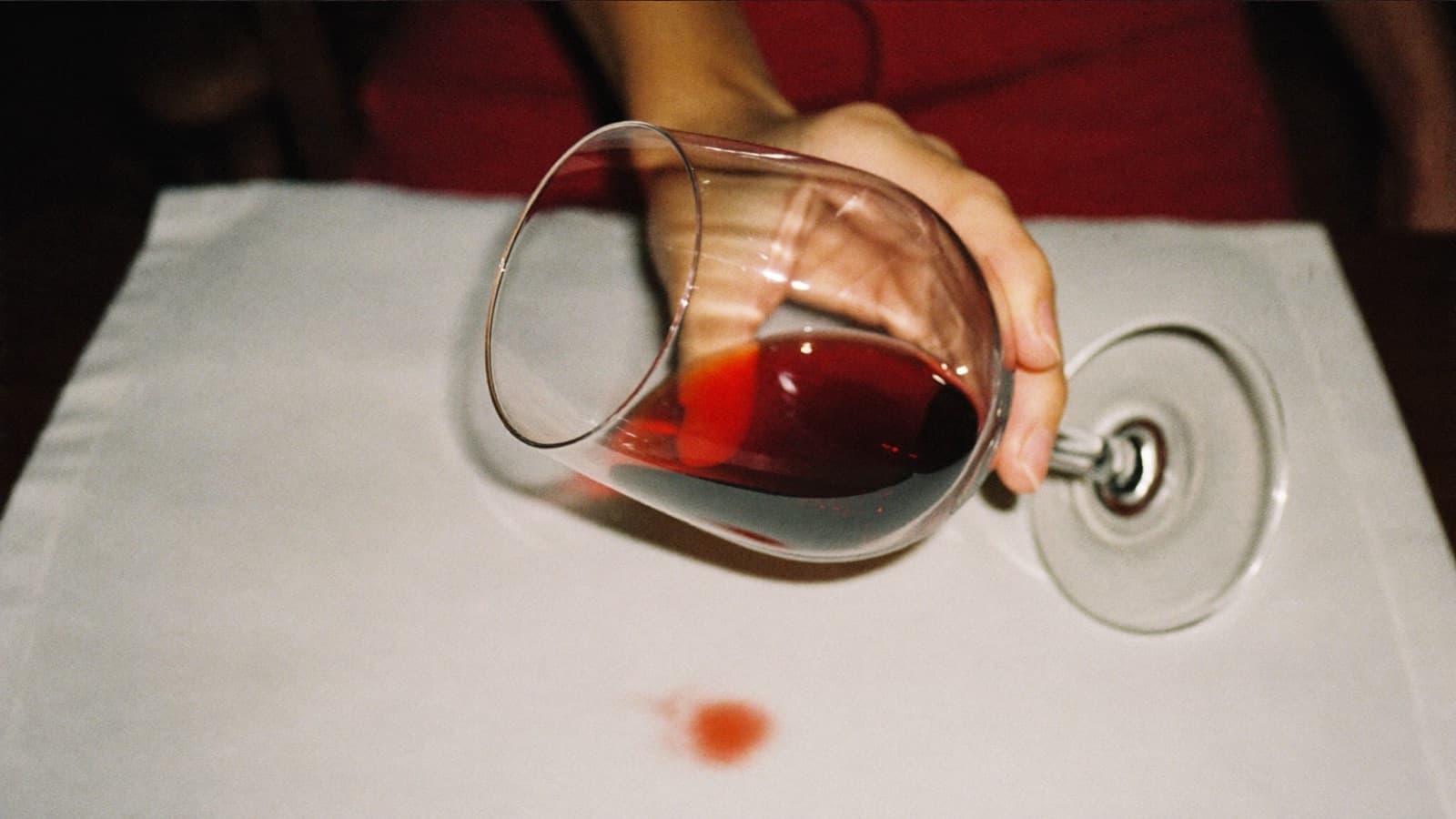
Hold your glass by the stem (so your hand doesn't warm the wine or smudge the bowl) and tilt it slightly against a white background: a napkin, a tablecloth, a piece of paper. You're looking at three things.
Color
White wines range from almost clear (Pinot Grigio, Vinho Verde) to deep gold (oaked Chardonnay, aged whites). Deeper color usually means more body and richness, either from grape variety, oak aging, or age in the bottle.
Red wines range from translucent ruby (Pinot Noir, Gamay) to opaque purple-black (Malbec, Petite Sirah). Deeper, more opaque color generally signals thicker skins, more tannin, and a fuller-bodied wine. As red wines age, they shift from purple and ruby toward garnet and brick.
Rosé ranges from nearly clear pale pink (Provence-style) to deep salmon or coral (saignée method or longer skin contact). Paler rosé is usually lighter and crisper. Deeper rosé often has more body and fruit weight.
Clarity
Most wines should be clear, not cloudy. A hazy appearance in a conventional wine might signal a flaw. However, many natural wines and unfiltered wines are intentionally cloudy, and that's perfectly fine. It's style, not defect.
Viscosity
Swirl the glass and watch how the wine flows back down the sides. Those streaks are called "legs" or "tears." More prominent, slower legs indicate higher alcohol, higher sugar, or both. They don't indicate quality. A wine with impressive legs isn't better than one without. But the legs do tell you something about what to expect: a wine with thick, slow legs will likely taste richer and more full-bodied.
Step 2: Smell
This is where 80% of wine tasting happens. Your nose can detect far more nuance than your tongue, so the smell tells you most of what you need to know before you take a sip.
The First Sniff
Give the glass a gentle swirl to release volatile compounds, then bring it to your nose. Don't jam your nose into the glass. Hold it about an inch from the rim and breathe in normally.
Your first impression matters. What hits you immediately? Fruit? Earth? Flowers? Spice? Something funky? That first note is usually the wine's dominant character.
What You're Smelling For
Fruit aromas. Every wine should have some fruit character. Whites tend toward citrus (lemon, grapefruit), tree fruit (apple, pear), tropical fruit (pineapple, mango), or stone fruit (peach, apricot). Reds lean toward red fruit (cherry, strawberry, raspberry), dark fruit (blackberry, plum, cassis), or dried fruit (fig, prune) depending on the grape and ripeness.
Floral and herbal aromas. Flowers (violet, rose, honeysuckle), herbs (thyme, sage, basil), and green notes (grass, bell pepper, eucalyptus) add complexity. Some grapes are particularly aromatic: Gewurztraminer smells like lychee and rose petals, Sauvignon Blanc often has fresh-cut grass and citrus, and Nebbiolo can smell like roses and tar simultaneously.
Earth and mineral aromas. Wet stone, chalk, clay, mushroom, forest floor, and truffle. These aromas are more common in Old World wines (French, Italian, Spanish) and often develop with age.
Oak aromas. Vanilla, toast, caramel, coconut, baking spice (cinnamon, clove, nutmeg), and smoke. These come from barrel aging and are prominent in oaked Chardonnay, Rioja, and most Cabernet Sauvignon.
Off aromas (potential faults). Wet cardboard or musty newspaper = cork taint. Vinegar = volatile acidity (the wine is turning to vinegar). Rotten eggs or struck match = sulfur compounds (sometimes blows off with air, sometimes a sign of poor winemaking). Nail polish remover = excessive ethyl acetate. Cooked fruit or Madeira-like aromas in a non-fortified wine = heat damage.
The Trick That Helps
If you're struggling to identify specific aromas, try this: instead of asking "what does this smell like?", ask "does this remind me of anything?" Your brain stores smells as associations, not labels. A wine might remind you of your grandmother's kitchen, a forest after rain, or a bowl of berries at breakfast. Those associations are valid and useful. You don't need to say "cassis and garrigue" to taste wine accurately. "Dark berries and herbs" conveys the same information.
Step 3: Taste
Take a medium-sized sip and let the wine spread across your entire tongue. Different parts of your mouth register different sensations, so you want full coverage.
The Five Components
Sweetness. Detected on the tip of your tongue, sweetness is the first thing you'll notice. Most dinner wines are dry (no perceptible sugar), but some have a touch of sweetness that softens the acidity. Off-dry wines have a hint. Semi-sweet and sweet wines have progressively more.
Acidity. Felt on the sides of your tongue, acidity makes your mouth water. High-acid wines feel crisp, fresh, and lively. Low-acid wines feel soft, round, and sometimes flat. Acidity is what makes wine refreshing and food-friendly. Think of the difference between lemonade (high acid, refreshing) and sugar water (no acid, cloying).
Tannin. Felt as a drying, gripping sensation across your gums and cheeks. Tannin comes from grape skins, seeds, and oak. It's present in almost all red wines and absent from most whites. High-tannin wines (Cabernet Sauvignon, Nebbiolo) feel mouth-drying and structured. Low-tannin wines (Pinot Noir, Gamay) feel smooth and silky.
Body. Body is the overall weight and texture of the wine in your mouth. Think of the difference between skim milk (light body), whole milk (medium body), and heavy cream (full body). Light-bodied wines feel thin and nimble. Full-bodied wines feel rich and viscous. Body is influenced by alcohol, sugar, tannin, and extract.
Alcohol. You can sense alcohol as a warming sensation in your throat and chest. Higher-alcohol wines (14-16%) feel hotter and heavier. Lower-alcohol wines (10-12%) feel lighter and more delicate. Well-integrated alcohol should warm, not burn. If the alcohol is the dominant sensation, the wine is out of balance.
The "Chew" Technique
Professional tasters often "chew" wine, moving it around the mouth with a slight chewing motion. This increases contact with all taste receptors and helps you assess the wine's texture and structure. You don't need to do this at a restaurant (it looks odd), but at home or at a tasting, it's genuinely useful.
Balance
The single most important concept in wine quality is balance. A wine is balanced when no single element (sweetness, acidity, tannin, alcohol, fruit) dominates the others. Everything works together.
An unbalanced wine feels lopsided: too acidic and sharp, too tannic and drying, too sweet and cloying, or too hot and boozy. A balanced wine feels harmonious, even if it's intense. The most powerful Barolo and the most delicate Riesling can both be perfectly balanced at completely different intensity levels.
Step 4: Finish
After you swallow (or spit, if you're at a professional tasting), pay attention to what lingers.
Length
How long can you still taste the wine after it's gone? A few seconds is a short finish. Ten to fifteen seconds is moderate. Thirty seconds or more is exceptional. In general, wines with longer finishes are higher quality, because the compounds that create flavor persistence require concentration and complexity.
Character
What flavors linger? Fruit, spice, earth, or something new that didn't show up in the initial taste? The finish sometimes reveals a wine's most interesting qualities. A Barolo that tasted like cherry and rose on the first sip might finish with tar, leather, and dried herbs. That evolution is a sign of complexity.
Sensation
Does the finish feel clean and refreshing, or does it leave a bitter, astringent, or alcoholic heat? A clean finish invites another sip. A harsh finish makes you reach for water. This is a strong quality indicator that even inexperienced tasters can detect immediately.
Building Your Tasting Vocabulary
You don't need a sommelier's vocabulary to taste wine effectively. You need three categories of descriptors.
Fruit: Cherry, strawberry, blackberry, plum, apple, lemon, peach, tropical fruit. These are the building blocks of almost every wine description.
Non-fruit flavors: Vanilla, pepper, cinnamon, toast, smoke, herbs, flowers, earth, mineral, leather, mushroom, butter. These add complexity and specificity.
Texture/structure words: Crisp, smooth, silky, velvety, grippy, tannic, light, full, round, angular, bright, flat. These describe how the wine feels rather than how it tastes.
Using two or three words from these categories gives you a complete description. "This wine has bright cherry fruit, some pepper and smoke, and a silky texture." That's as valid a tasting note as anything a professional would write.
Tasting at Home vs. Tasting at Events
At Home
Taste side by side whenever possible. Open two wines of the same grape from different regions, or two different grapes at similar price points. Comparison is the fastest way to learn. You'll notice differences that you'd miss tasting one wine in isolation.
At Tasting Events
Pace yourself. If there are 20 wines to taste, you don't need to drink them all. Use the spit bucket. Seriously, nobody at a professional tasting judges you for spitting. That's what the bucket is for. Start with lighter wines (sparkling, white, rosé) and move to heavier wines (reds, dessert wines). Take notes if you want, but a simple "liked it" or "didn't like it" with a one-word descriptor is enough to remember your preferences.
At Restaurants
You can apply this framework to every glass you order. You don't need to announce your observations. Just pay attention. Over time, you'll develop an intuitive sense for what you like and why, which makes future ordering faster and more confident.
The Most Important Thing
Tasting wine is a skill, and like any skill, it improves with practice. But the goal isn't to become a sommelier. The goal is to pay enough attention to know what you like, understand why you like it, and communicate that when you're ordering.
You don't need to identify seventeen aroma compounds or debate the merits of 2019 versus 2020 Burgundy. You need to know whether you prefer wines that are light or full, fruity or earthy, crisp or smooth. Those three preferences are enough to order well at any restaurant for the rest of your life.
Everything else is just practice, and practice in this case means drinking wine and paying attention. There are worse hobbies.