

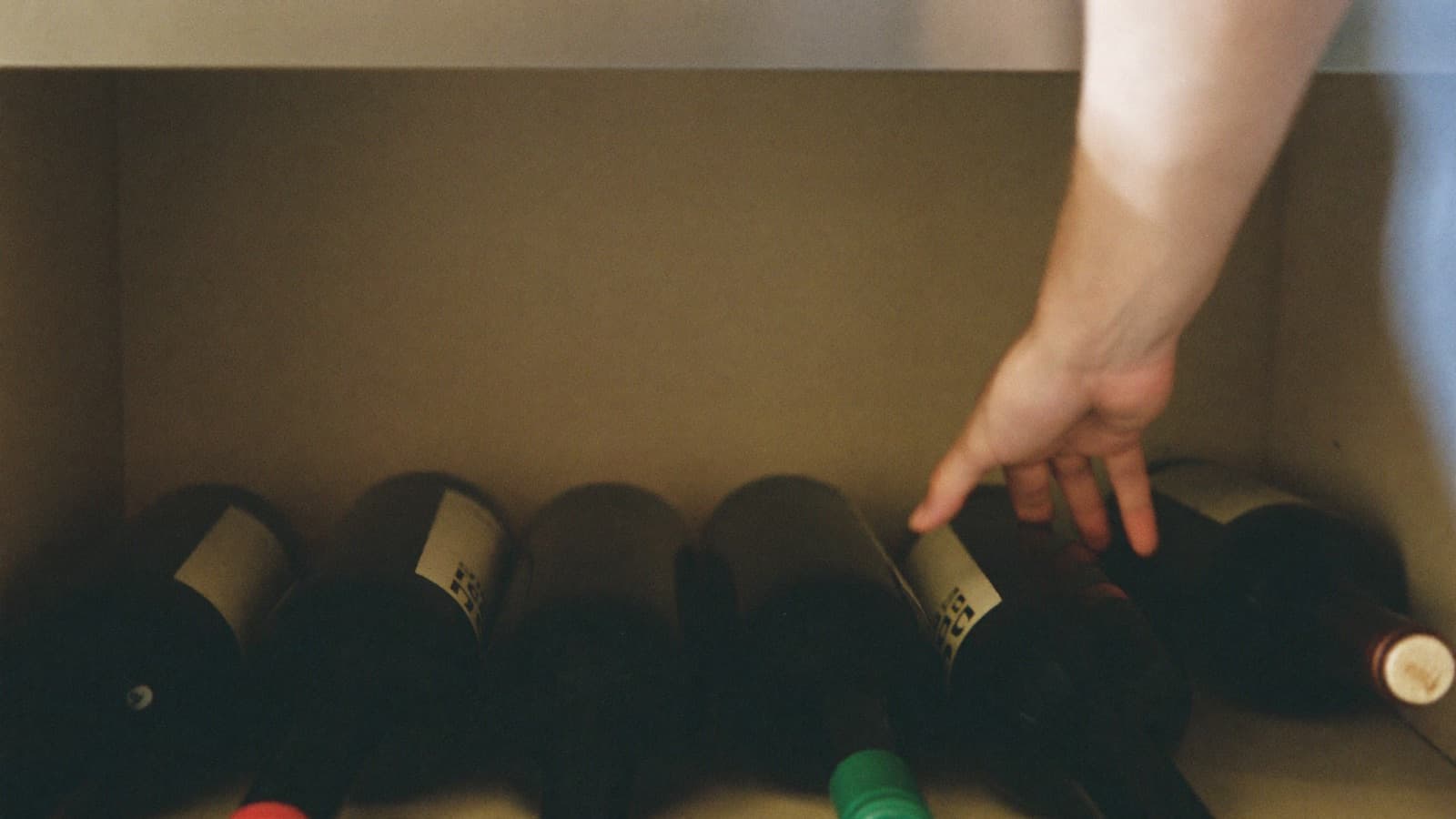
Here is how most people store wine at home: on the kitchen counter, next to the stove, in direct sunlight, at whatever temperature the kitchen happens to be.
This is not wine storage. This is a slow goodbye.
The good news is that doing it right requires almost no equipment, no renovation, and no subscription to a magazine that uses the word terroir three times per paragraph. You just need to understand what wine is afraid of — and it turns out wine is afraid of four very specific things.
The Four Enemies of Wine
Heat is the number one killer. Wine stored above 70°F (21°C) ages fast and badly. Above 75°F, things start going genuinely wrong within weeks — the wine cooks, flavors flatten, and the lovely bottle you were saving for a special occasion turns into something that tastes like regret and dried fruit.
The ideal storage temperature is 55°F (13°C). That's a proper wine cellar. But anything between 50°F and 65°F is fine for bottles you're planning to drink within a year or two. The key word is consistent — temperature swings are almost worse than steady warmth, because expansion and contraction work the cork like a pump, letting air in and wine out.
Light — specifically UV light — degrades wine compounds over time. This is why wine bottles are usually dark glass. It's also why your sun-facing kitchen shelf is quietly ruining whatever's sitting on it. If a wine is in direct sunlight for weeks, it will taste muted and flat in a way that's hard to diagnose but easy to feel.
Vibration disrupts the slow chemical processes that happen as wine ages. This matters a lot less for bottles you're drinking within a few months. It matters a great deal if you're keeping a nice Bordeaux for five years next to the washer-dryer combo.
Oxygen is the enemy of opened wine, not so much of sealed bottles (assuming they're stored correctly). For bottles you haven't opened yet: as long as the seal is intact and the cork is moist, you're fine. Corks dry out when stored upright, which lets air in. Store bottles on their sides.
The Practical Solutions That Actually Work
For Bottles You're Drinking Within 3 Months
You don't need anything special. Just find the coolest, darkest spot in your home that isn't a refrigerator.
What actually works: A low cabinet in a room that doesn't get direct sun. A closet in an interior room (interior walls stay cooler). A basement corner even if it's not temperature-controlled. Under a bed works if your bedroom runs cool.
What doesn't work: On top of the refrigerator (it gets warm up there — the fridge radiates heat). On the kitchen counter near the stove or window. In the garage in summer.
For bottles on deck for the week, a regular kitchen countertop is fine. You're not aging them. You're staging them.
For Bottles You're Keeping 3 Months to 2 Years
A wine refrigerator is worth it at this stage. A basic 12–18 bottle countertop unit runs $80–$150 and does exactly what it needs to do: maintain a consistent 55°F and keep the light out.
You don't need dual-zone temperature control. You don't need a Bluetooth thermometer. You need a small appliance that holds a consistent temperature and fits on your counter without making you feel like you've committed to a lifestyle.
The NewAir 12-bottle and Ivation 18-bottle models are solid entry points and go on sale constantly.
For Bottles You're Keeping 2+ Years
Now you need to think more seriously. A proper wine storage unit — either a larger dedicated wine fridge (50+ bottles) or a converted closet with a cooling unit — is the move.
The Wine Enthusiast and Whynter make units in the 50-bottle range for $300–$500 that are genuinely good. If you're storing anything serious for 5+ years, it's worth spending that money. Storing a $100 bottle in a $150 fridge is still cheaper than the wine costing $250 in a restaurant when you could have bought two bottles at retail and kept them properly.
The Opened Bottle Problem
You opened a bottle. You didn't finish it. Now what?
Put it in the refrigerator immediately. Even red wine. Cold dramatically slows oxidation. A red wine from the fridge for the next two days — just let it sit out for 20 minutes before you pour — is infinitely better than red wine left on the counter overnight.
How long do you actually have?
- Light whites and rosés: 3–5 days in the fridge, recorked
- Full whites (oaked Chardonnay, white Burgundy): 3–5 days
- Light reds (Pinot Noir, Gamay): 2–3 days — they fade fast
- Bold reds (Cab, Syrah, Zinfandel): 3–5 days — tannin and structure help
- Fortified wines (Port, Sherry): weeks to months — they're built for longevity
- Sparkling wine: 1–2 days with a sparkling wine stopper (the kind that clamps over the bottle). Without a stopper: drink it tonight
Do wine preservation tools actually work?
The Vacu Vin pump (about $12) helps and is worth having. The Coravin (the needle-through-cork system, $130 and up) is genuinely impressive for expensive bottles you want to pour from without committing to finishing. For everyday bottles, the fridge does most of the work and you don't need gadgets.
The Specific Thing About Your Kitchen Counter
The single most common mistake: storing wine upright, at room temperature, in a bright kitchen, for months.
If your kitchen runs 72°F or warmer (most do in summer), every bottle sitting on that counter is slowly becoming something you'll describe as "a bit flat" or "not quite right" without understanding why.
Move them somewhere cooler this week. Even a low cabinet in an interior room will meaningfully improve what ends up in your glass.
What You Actually Need to Buy
If you own zero wine storage equipment right now, here's the shopping list:
- A countertop wine fridge ($100–$150) if you regularly keep more than a few bottles on hand
- A Vacu Vin pump ($12) for opened bottles
- A sparkling wine stopper ($8) so you stop wasting bubbles
That's it. $150–$170 total. The first bottle you don't ruin pays for everything.
The rest is just finding a cool, dark shelf and tipping your bottles on their sides. Two minutes of effort. Significantly better wine.
Do it before you go to bed tonight.