

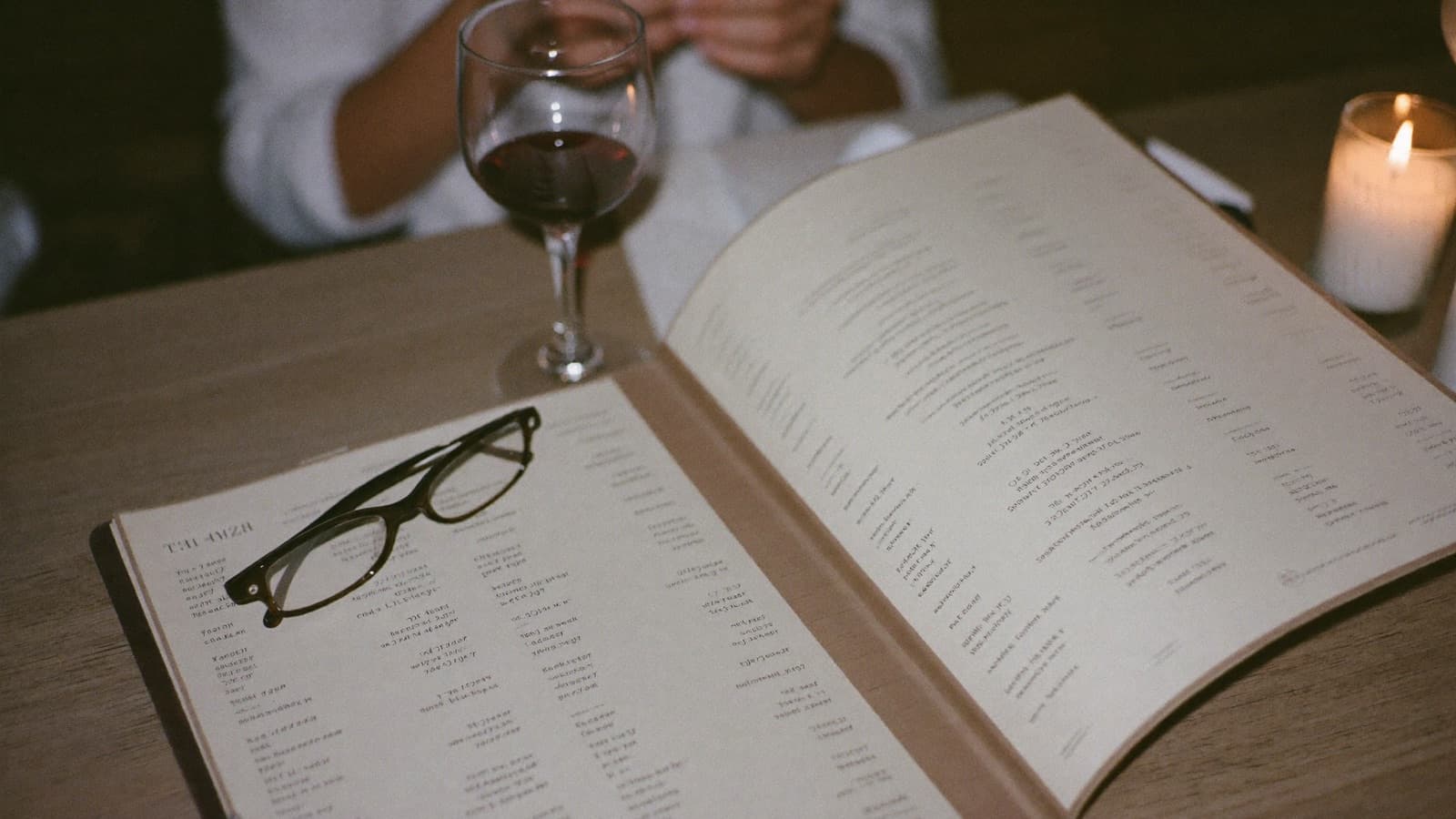
A bottle of wine that costs $18 at your local wine shop will show up on a restaurant list for $54–$72.
This is not a scam. It is math.
The restaurant bought the bottle for approximately $12–$14 (wholesale pricing is about 20–30% below retail). They need to recover: storage, the sommelier's salary, the glassware that breaks, the training, the inventory carrying cost, the table service. The standard markup is 2.5–3x cost. In a fine dining context, it can go higher.
Knowing this changes nothing about the pricing. It does change where you look for value.
The Fundamental Markup Math
The basic formula most restaurants use:
Bottle cost (wholesale) × 2.5 to 3 = list price
So:
- A $10 wholesale bottle → $25–$30 on the list
- A $20 wholesale bottle → $50–$60 on the list
- A $40 wholesale bottle → $100–$120 on the list
The percentage markup often decreases as the bottle price increases. This is where value hunters operate.
A $15 wholesale bottle marked up 3x = $45 on the list — you're paying 3x. A $60 wholesale bottle marked up 2x = $120 on the list — you're paying 2x.
The math rewards you for spending more, proportionally. This is counterintuitive and very real.
The By-the-Glass Economics Are Different
By the glass is a different product. The restaurant has to protect itself against opened bottles that don't sell, which means the per-glass price is typically set to recover the cost of the entire bottle from the first two glasses.
The rule of thumb: multiply the glass price by 4 to find the implied bottle value. If the house Chardonnay is $14/glass, the implied bottle value is $56. If that same bottle is on the bottle list for $52, you're better off with a bottle. If you and your dining partner are both having two glasses, the math almost always favors a bottle.
When by-the-glass makes sense:
- You want two different wines (one red, one white at the table)
- You're unlikely to finish more than one glass
- You want to try something before committing to a bottle
- The by-the-glass list has wines not available by the bottle
When the bottle wins: Every other time.
Where Value Actually Lives on a Wine List
The Middle Third Is Your Friend
The cheapest bottle on a list is usually a high-volume wine with low margins. The most expensive bottle is a status purchase. The middle third is where most serious restaurants invest their buying.
A good sommelier or wine director builds their list with personal conviction in the $50–$90 bottle range. These are the wines they argued for getting on the list. The markup is often smaller in percentage terms, the quality is higher relative to price, and the wines are frequently from producers the restaurant has a relationship with.
When you land in the middle third and ask your server "what do you love on this list in this range?" you are accessing that conviction directly.
Regional Wines Beat Trophy Names
A $70 Napa Cabernet on a restaurant list was a $25–$28 wholesale bottle — you're paying 2.5–3x for a name that everyone recognizes.
A $70 bottle of Barolo, Côte de Nuits village wine, or interesting Priorat was probably a $30–$35 wholesale bottle — you're paying 2–2.2x for something genuinely distinctive, often with more age and complexity than the Napa bottle sitting next to it.
The familiar names (Duckhorn, Jordan, Prisoner, Rombauer) are the Napa equivalent of ordering the Budweiser because you recognize it. You're paying a premium for the recognition, not for proportionally better wine.
This isn't an argument against ever ordering a Napa Cab. It's an argument that the same list price gets you dramatically more wine if you go one column over.
Older Vintages Are Often Underpriced
Restaurants carry inventory for years, sometimes decades. A 2012 Brunello on a 2026 list may have been purchased at a price that hasn't been adjusted for current market value. The wine has also had 14 years of cellar aging that you'd never find at a shop for the same price.
If you see a wine on a list with a vintage from 8+ years ago at a price that seems similar to current-vintage bottles: that is a value. The restaurant isn't always repricing their back inventory aggressively.
Second Labels and Lesser Appellations
Every serious wine region has a hierarchy. The top appellation carries a premium. The second-tier appellation from the same producer or region often gives you 85% of the experience for 50% of the price.
Examples:
- Côte de Nuits Villages vs. straight Burgundy village wines — the former is a specific region, often better, often the same price
- Cru Beaujolais (Morgon, Moulin-à-Vent, Fleurie) vs. generic Beaujolais — completely different quality tier, rarely different price tier at a restaurant
- Langhe Nebbiolo vs. Barolo — same region, same producer often, fraction of the price
The Question That Unlocks Restaurant Wine Lists
Here is the single most useful question you can ask a sommelier or wine-knowledgeable server:
"What's the best value on the list tonight? The bottle where we're getting the most wine for the money."
This question does several things at once. It signals you're engaged. It gives them permission to recommend something they love that doesn't have a famous label. It often surfaces exactly the hidden-value bottle they've been waiting for an excuse to sell.
The sommelier who answers "the 2019 Domaine Drouhin Laforêt Burgundy" instead of the obvious Pinot Noir is doing you a genuine service. Follow that recommendation.
The Numbers That Matter Tonight
- Glass price × 4 = the implied bottle value. Compare to the bottle list.
- Middle third of the list = where the wine director's conviction lives.
- Vintage 8+ years old = potential cellar value you're getting at list price.
- Unfamiliar region, comparable price = almost always better value than the recognizable label next to it.
The markup is not going away. The restaurants need it and the service and experience it funds are genuinely valuable. But within the markup structure, there is a meaningful difference between the bottle you pick and the bottle you could have picked.
The best value on every wine list is not the cheapest bottle.
It's the bottle that was priced for a less curious table.